The pros and cons of commuting
Everyone moans about the length of their commute. Should managers care?
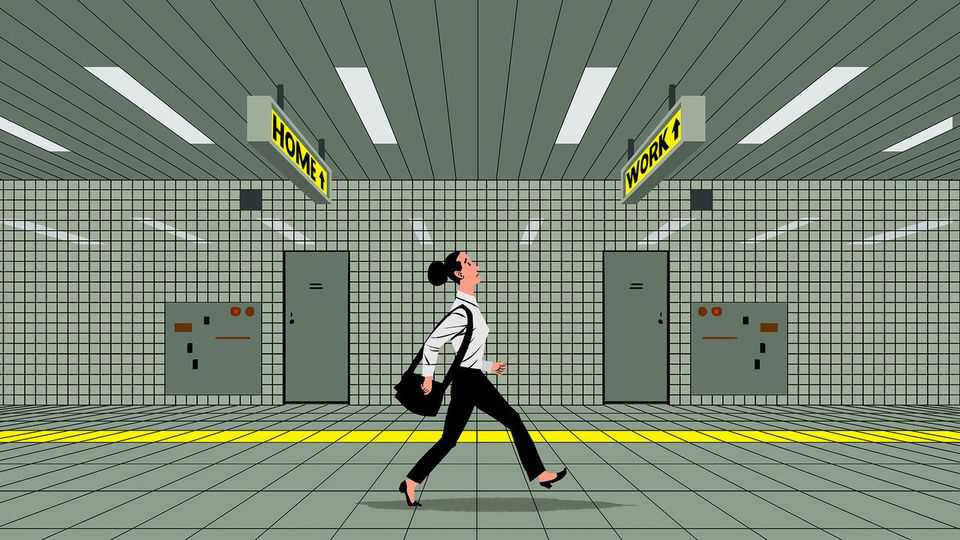
Ask someone if they have regrets, and very few people will say: “I wish I had spent more of my life commuting.” The time spent travelling from home to work and back again tends to be neither relaxing nor productive. It is usually routine and sometimes unpleasant: anything that involves loads of traffic or armpits is hard to like.
In popular culture the monotony is the point. Commuting becomes a trap (“Exit 8”), a window on the real action (“The Girl on the Train”) or a commentary on the softness of modern society (“The War of the Worlds”). The covid-19 pandemic gave people the chance to experience a commute-free existence, and many of them loved it.
So when people are surveyed about their perfect commute time, the unsurprising answer tends to be “shorter”. On average people around the world spend roughly an hour a day commuting. But however long their travel time is, they want to lop that total roughly in half.
A study published last year by Jonas De Vos of University College London into the commuting preferences of over 2,000 students and staff at the university is typical. The average actual commute time was a hefty 54 minutes one way; the average ideal time was 31 minutes. (Ideals vary depending on how someone gets to work: a person who is on a train for an hour, for example, envisages a commute that is much longer than someone with a 30-minute bike ride.)
Long journeys can impose costs on employers as well as commuters. For instance, they can increase staff turnover. A paper by Francisco Santelli of Brown University and Jason Grissom of Vanderbilt University examines the commute times for teachers at public schools serving Nashville, Tennessee. They find that each five-minute increase in one-way commute time predicts a 0.8-1 percentage-point increase in the probability that a teacher will transfer to another school within the district.
Time spent travelling can also hurt productivity. A study by Hongyu Xiao of the Bank of Canada and his co-authors found that every 10km increase in an inventor’s commuting distance brought about by a corporate relocation was associated with a 5% decrease in patents. What lies behind this fall-off is not clear, but one explanation is simply that people are spending less time at work.
No one yearns to spend more of their life commuting, then. But even long journeys can have benefits. In his study, for example, Mr De Vos also asked people what was the maximum commute length they were prepared to tolerate. This was more, on average, than the length of their current commute, which suggests some awareness of the upsides to tolerating protracted travel times: lower housing costs, better amenities close to home and a greater choice of employer.
Ismir Mulalic of Copenhagen Business School points out that the one-hour global average commute has remained pretty steady over time despite big changes in transport technology. He recalls a study he co-authored into the effects of a corporate relocation; to his surprise, some of the workers who were suddenly handed shorter commutes reacted to this “beautiful present” by moving home to be farther away.
A commute can bring rewards of its own, too. Some scholars burble about commuting as “a liminal space”, a pompous term that nonetheless captures something real: the journey to and from the office is a handy way to gear up for the working day or to wind down from it. Active modes of travel like cycling and walking are correlated with greater well-being than sitting in a car.
Firms are right not to be indifferent to their employees’ journeys to work. Plenty offer explicit and implicit subsidies to defray commuting costs, from financial help to parking spaces. Hybrid working and flexible hours can also ease the burden of travelling. But the greatest power to improve commute times, through better public transport and more housing supply, lies in the hands of policymakers. And to the extent that commuting time is an expression of individual preferences, firms should pay most attention when those preferences suddenly change.
That means one event in particular. A paper co-authored by Mr Mulalic which looked at data for the full working population of Denmark between 2003 and 2013 found that women with a long commute are several times more likely to change jobs when they have a child. (Men are not.) Everyone says they want a shorter commute. New mothers mean it. ■