The human genome encodes for a new category of molecule
They may be useful targets for future drugs
In science, whether an anomaly is insignificant or the basis for a promising new field of study can boil down to the catchiness of its name. Pick the wrong one, and conferences are hard to organise and funding shrivels up. But pick the right one, and the publicity takes care of itself.
In that spirit, say hello to peptideins: a newly named class of molecules found within human cells that are similar to proteins but smaller and with vaguer purposes. As the authors of the paper that named them, published in the journal Nature this week, point out, they may still be important. Sebastiaan van Heesch, a protein specialist at the Princess Máxima Centre in the Netherlands who co-led the new study, has said that peptideins might “unlock new insights and drug targets across human biology”, potentially assisting with the development of immunotherapies and vaccines against cancer. What is certain for now is that they complicate the conventional picture of how cells work.
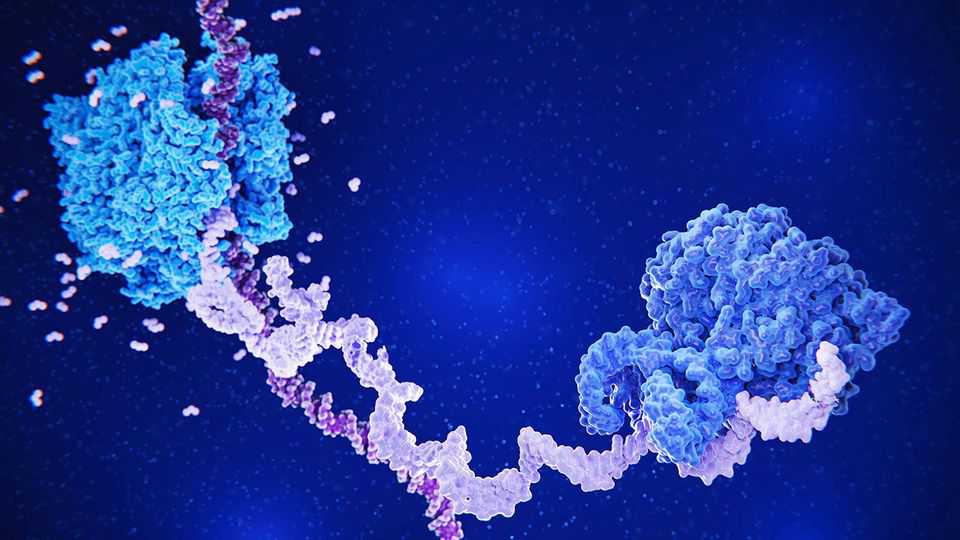
Simply put, enzymes within a cell are thought to copy strands of DNA into molecules of RNA. These in turn are used as blueprints to make chains of amino acids known as peptides. (This second process, known as translation, is largely handled by cellular components called ribosomes.) Proteins are a loosely defined subset of peptides: those that are of a certain size; have a known function; and can be found across several species.
There are about 19,500 recognised human proteins, each of which shares its name with its functional gene—the stretch of DNA responsible for making it. Many are important. The p53 protein responds to DNA damage and either pauses cell growth and division or triggers cell death as a way to suppress cancer. Insulin, a hormone, is a protein that regulates blood sugar by instructing cells to absorb glucose.
For years cell biologists focused on the bits of the genome that were known to code for the proteins, with the rest dismissed as junk. But better experimental tools have revealed cracks in this simple picture and shown that DNA has valuable functions beyond protein manufacture.
A technique known as ribosome profiling, for example, which can reveal the precise spot on an RNA strand where translation is under way, allowed researchers to map exactly where the cell’s protein-making machinery is active. It revealed that translation might be happening in genome regions far from known genes. At the same time, increasingly sensitive mass spectrometry experiments allowed for ever smaller molecules to be spotted in cell samples. Together, these techniques shifted the focus towards sections of DNA capable of making molecules that look like miniature proteins.
The dark proteome, as this collection of “microproteins” is known, has befuddled scientists even as it has grown. Though they were once dismissed as unworthy of attention, recent studies have suggested that microproteins could be concealing drivers of disease. They could be fruitful targets for future drugs to aim at.
Dr van Heesch and his colleagues have produced the most detailed map of this dark proteome thus far. By pooling and analysing the results of previous experiments they confirmed the existence of 1,785 microproteins. Their paper reveals just how small some of these are: about 65 per cent of known microproteins held fewer than 50 amino acids. That is smaller than over 99 per cent of the 19,500 known proteins.
Some well-studied microproteins are already known to be biologically useful. One, called ASNSD1-uORF, is involved in the progression of the childhood brain cancer medulloblastoma. Another, humanin, protects cells from stress and may play a role in healthy ageing as well as the onset of neurodegenerative diseases.
The vast majority of discovered microproteins, however, have not been linked to any concrete biological effects. It is this group that Dr van Heesch and his colleagues have dubbed the peptideins. By formalising them in this way, the researchers want to encourage the researchers who compile protein databases to study them as well as to take their possible roles in health and disease more seriously.
Many of the peptideins confirmed so far suggest this approach may have value. Some are expressed and displayed on the outside of tumour cells, for example, which could allow them to be recognised by the body’s immune system. These could offer new targets to help immunotherapy drugs locate and remove such cancerous cells. It is also possible, the researchers suggest, that peptideins might regulate the activity of other genes or influence cell signalling.
Just how many peptideins there are remains an open question. Some experts warn that ribosome profiling is prone to flagging false positives—what looks like translation occurring at a surprising site, in other words, may be little more than an illusion. Indeed, this week’s paper identifies thousands of possible peptidein sightings that could not be confirmed, though future search methods may be better equipped to do so. Many peptideins may also turn out to be damp squibs. For David Tollervey, a cell biologist at the University of Edinburgh, it is unlikely that more than a few hundred prove useful.
A better understanding of peptideins will determine whether or not the name catches on. If they prove to be largely unimportant, it may soon be forgotten. But if studying them pays off, prepare to hear the name a lot more. ■