The history of Moscow helps explain Russia’s pathologies
Invasion marked the city’s rise from medieval backwater to imperial metropolis
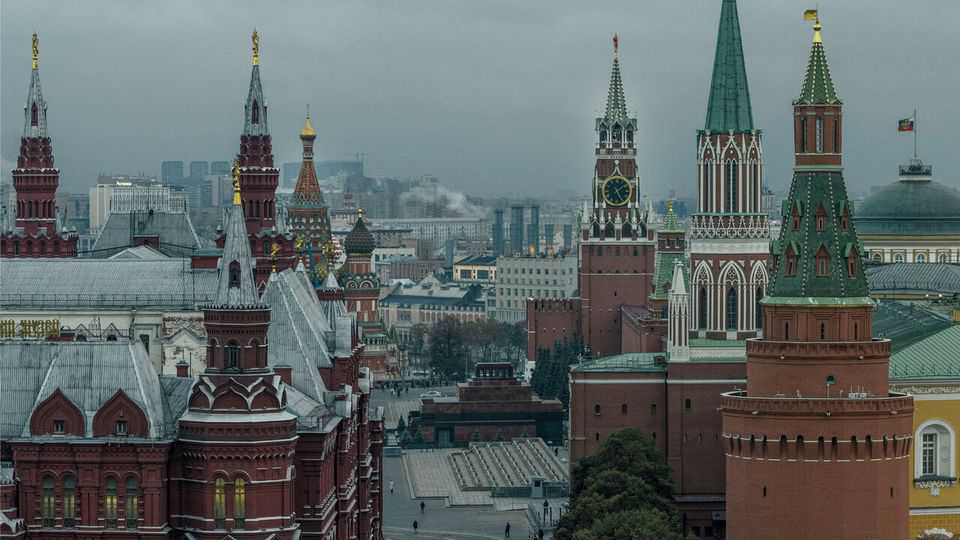
“Do you love Moscow?” Not long after this reviewer moved there in 2004, he was asked that question by his grizzled landlord. A bit early to know, was his cautious response. “Good,” replied the landlord. “Foreigners who say they love it here soon run back to the airport—with no luggage.” Simon Morrison of Princeton University, a devotee of the carnivorous city since the last days of the Soviet Union, is less equivocal. “Moscow is hard to love,” he acknowledges, “but I love it.”
His is a love without illusions, however. Today it is “a showcase capital”, its downtown beautified as a sop to disenfranchised citizens. But as Mr Morrison shows in his technicolour chronicle of the city, beneath the petro-funded sheen, Moscow is a domain of purges, paranoia and ravenous power. History has shaped its character; equally, as much as that of any metropolis, Moscow’s character has shaped history, both Russia’s and the world’s.
The first half of this book traces the origins and evolution of the Russian state, from Moscow’s first recorded mention in 1147 to the 17th century. Like the history of other states, only more so, it is a saga of dynastic struggle, vicious intrigue, autocracy and wanton cruelty. To live in Moscow, it helps to have a bleak sense of humour—and the same goes for reading about it. In a typical anecdote, a 14th-century prince cuts out a rival’s heart. Later the prince “would himself be murdered, and then his murderer would be murdered”. Ivan the Terrible killed a jester by pouring scalding soup on his head. “To hell with him!” Ivan scowled. “He made no attempt to recover!”
Ivan wasn’t all bad, notes Mr Morrison. He introduced a few useful reforms in the 16th century, as well as boiling and roasting people. “Such, at times, has been Russia’s tragedy,” the author laments: “barbarism in the service of civilisation”. Under Ivan and his grandfather, Ivan III, Moscow consolidated its hold over the region and developed a bureaucracy. After them came the macabre “time of troubles”, a bout of mayhem that ended with the Romanovs’ accession in 1613. The legacies of that traumatic era include lasting convictions that brutal rule is preferable to chaos, and that bloodshed can be redemptive.
In these murky centuries, some motifs recur. One is invasion—both of Moscow and by it. Local strongmen were better at slaughtering each other and fighting other Slavic cities than at repelling outsiders. Moscow was repeatedly sacked by the Mongols. Meanwhile, “to thwart invasion, Moscow invaded, again and again”, seeking a buffer zone for its buffer zone, as, alas, it still does now. Another theme is fire, which periodically razed it. Sometimes, as with Napoleon’s campaign of 1812, the scourges came together. Given these threats, and the risk of state expropriation, property has often been insecure: “Nothing was permanent or meant to last.”
Two other cities shadowed Moscow’s rise from “a fort on a hill along a river” to an imperial metropolis. First Kyiv, to which it was linked by dynastic and cultural ties, but compared with which it was for centuries a philistine, obscurantist backwater. Moscow had no theatres until the 1670s; visiting diplomats boggled at its drunkenness. Second, St Petersburg, founded by Peter the Great and Russia’s capital from 1712 (Lenin switched it back to Moscow in the havoc of the Bolshevik revolution). Peter disliked Moscow, where, as a boy, he saw a mob impale some of his relatives.
With its Italianate architecture and access to the Baltic Sea, St Petersburg embodied an openness to Enlightenment ideals and westward integration. (In theory: in practice it had its share of dolts and bigots.) Conversely, Moscow “resisted Europe—and still does”. The contrast between the cities captures Russia’s alternating engagement and enragement with the West. To ride the train between them, once a tourist treat, is to trace an axis of history.
The second half of this study, at once scholarly and impressionistic, takes urban features and individuals as emblems of later trends. Among them is the ornate Metro, the construction of which cost an unknown number of workers’ lives; some overseers perished in the purges. Here the Metro stands for Stalin’s breakneck transformation of his capital—it became “a map of his obsessions”—and its experience of the second world war, when stations doubled as shelters. Stalin threw up monumental buildings, redrew streets and tore down landmarks as brusquely as he deported entire national groups across his realm.
Then there is the cathedral built to commemorate the expulsion of Napoleon. It was dynamited in 1931 to make room for a grandiose “Palace of Soviets”. Instead the site became a giant swimming pool, with a VIP zone that hosted prostitution and black marketeering, before, in the 1990s, the cathedral was rebuilt. The farrago illustrates the corrupt nexus of church and state in Russia, and the vandalism, venality and incompetence of the city’s overlords.
“Power looks after itself,” Mr Morrison observes. “Power exists for itself,” an attitude cultivated in hunkering Moscow and projected by its crabbed rulers across an empire and beyond. The city, he writes, is “completely unfree”. It is a place stalked by armed men in uniform, where life can be a tightrope-walk for people without connections. At weekends droves of Muscovites escape to their dachas, where the air is cleaner and they can breathe more freely.
At the same time, the author says, Moscow “seems anarchically unbridled”, crackling with the urgency of life on the edge. After the Soviet Union fell, this electric mood—the sense that “Anything can happen”—attracted curious Westerners, from sleazy carpetbaggers to cultural explorers like Mr Morrison. (Moscow also drew in countless workers from ex-Soviet republics, for whom it remains the imperial hub.) When the city spat them out, many wound up pining for it in their tamer homelands.
Now, during its latest imperialist spasm, Russia is a pariah in the West. Moscow is in effect off-limits for many foreigners; the Kremlin is squeezing Muscovites’ remaining freedoms. Still, that tale of “a church, which became a public pool, which became a church again” suggests another lesson of Moscow’s history. Nothing—no tyrant, regime or ideology—lasts forever. Mr Morrison offers an apt variant of this moral: “Everything was forever, until it was no more, until it was again forever.” ■