The Democratic approach to AI is not all about bans
Rahm Emanuel charts a centrist path for AI
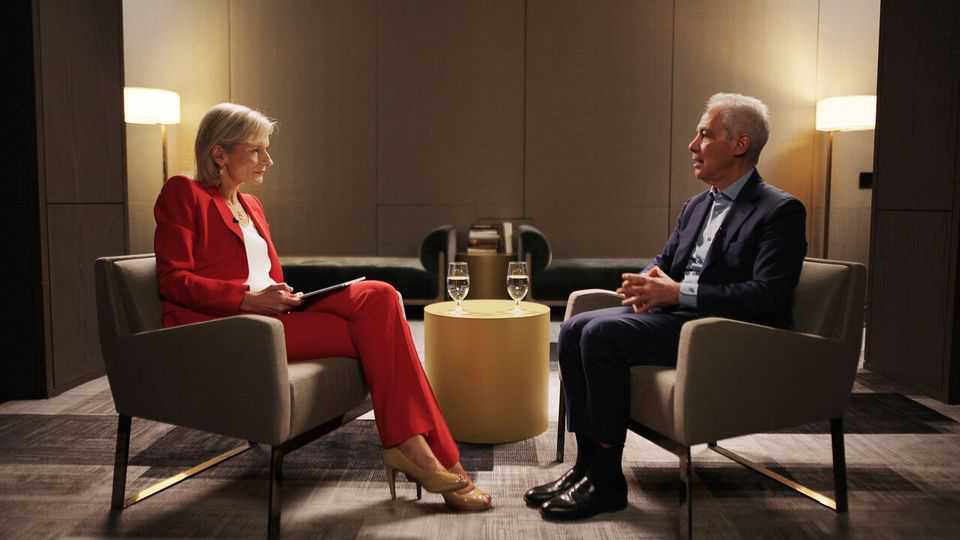
IN ALMOST EVERY interview he does, Rahm Emanuel, a fixture at the top of Democratic politics for four decades, plays coy when asked about whether he plans to run for the presidency in 2028. What he is rarely asked is where he stands on what is likely to be one of the gnarliest issues of that race, artificial intelligence (AI). Call him a pillar of the party’s centrist old guard, his ideas on AI are up to the minute. “AI keeps me up at night,” he says.
In an interview for our Insider show, Mr Emanuel calls for a high-speed regulatory approach to AI. That contrasts with what the progressive wing of his party, led by Bernie Sanders, a senator from Vermont, wants—which is to jam on the brakes. Yet, like those to his left, Mr Emanuel is open to some sort of guaranteed income for those whose livelihoods are affected by the technology. Though he supports providing “a floor that people don’t fall below”, he worries that a guaranteed income could sap “meaning” from people’s lives. He doesn’t elaborate on ways to restore purpose.
The former ambassador, mayor and White House Mr Fix-it is struck by the widespread fears of inequality caused by AI. “The American people believe that there’s going to be five tech bros who will walk out like bandits,” he says, leaving everyone else in the lurch. “On one side, you can’t concede [AI] to China. On the other side, you can’t have the Wild West.” He is also worried that the scale of disruption AI causes will be more than that of other technological upheavals, such as railways, electricity and the internet.
Mr Sanders and Alexandria Ocasio-Cortez, a Democratic congresswoman, say AI is moving so fast Congress cannot keep up. They have proposed legislation to slap a temporary ban on the building of data centres used to train and run models. Mr Emanuel takes a different approach. Given the speed with which AI is evolving, he suggests creating a bipartisan regulatory task force that makes decisions in real time about its safety. He mentions Mythos, a new model from Anthropic, an AI lab, whose software capabilities pose staggering cyber-security risks. His ideas bear some resemblance to those of the Trump administration, which in response to Mythos has started to shift from a laissez-faire treatment of AI to considering ways to oversee the latest model releases.
The childhood ballet dancer pirouettes when discussing AI bosses. OpenAI’s Sam Altman and xAI’s Elon Musk are “pissing on each other”, but he respects some of their ideas. He hails what he calls Mr Altman’s “New Deal,” a proposal from OpenAI whose most radical idea is a sovereign-wealth-style investment fund. Seeded by the AI industry, it would give everyone a stake in faster economic growth by distributing returns from investments made in producers and users of the technology. He also lauds Anthropic’s CEO, Dario Amodei, for standing up to the Pentagon in a fight over the use of its AI models for autonomous weaponry and mass surveillance.
Mr Emanuel, who served both Bill Clinton and Barack Obama in the White House, has a broader domestic agenda that is classic centrist stuff. He has plans for school reform, opposes tariffs, is nuanced on free trade and wants tax reform to make the system less generous to inherited wealth. He is dismissive of the redistributive agenda of the left of his party.
As for running for president, he remains non-committal. “We’ll see,” he says. But his enthusiasm appears to be rising. “One thing I do know is that candour, authenticity and strength are going to have a really high value. Nobody is going to [look at me] and say ‘there goes weak and woke’.” ■