The case against trees
India’s bureaucrats are bad at trade-offs between nature and roads
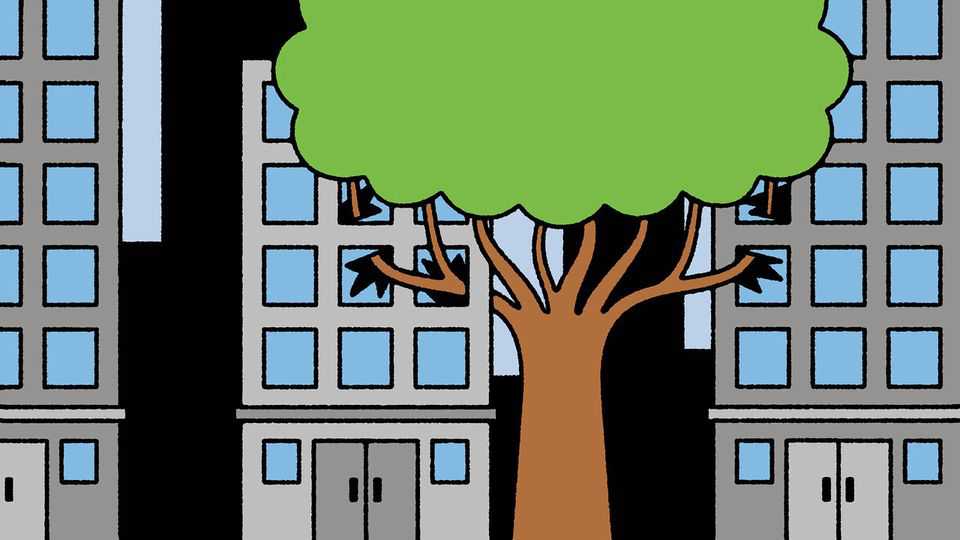
TWO YEARS ago the authorities tore down a building on Hill Road, a busy street in an overpriced part of Mumbai, to widen it and ease the traffic. But they left in place a large-canopied rain tree that stood in front of the vanished structure. In theory, the road has been widened. In practice, however, the building’s footprint is now an informal car park.
The Hill Road tree is not an exception. Across Mumbai traffic is obstructed by trees that remained rooted as lanes were added. It is the same story in other growing cities. The reason for this bizarre state of affairs is that there is a noisy group even more feared by authorities than motorists, who are themselves no pushovers. That is the tree-huggers.
India has spent the past 25 years frantically building infrastructure, both in cities and between them. The pace sped up after Narendra Modi, who enjoys few things more than a highway inauguration ceremony, came to power in 2014. Yet a binary idea has taken hold that trees and development are antithetical to each other. This is rather a strange notion for a country that can do with a lot more of both.
Indian cities badly need more green cover. A recent heatwave that pushed temperatures well past 40°C reminded everyone, not least the 90% of Indian households without air-conditioning, why urban trees matter. They not only provide shade to humans but also keep the asphalt underneath from warming up and radiating heat. But things quickly took a turn for the silly. One newspaper ran a story about a man who compared temperatures in the sun and the shade. “This isn’t magic,” the paper reported, apparently without irony, but something “forgotten in the rush to build more flyovers and high-rises”.
Yet urban India needs to build more flyovers and high-rises, too. Some 40% of the country’s 1.45bn people live in its dysfunctional cities. One way to improve their lives—and their productivity—is by making it easier to get around. Poor road networks need scaling up. Public transport has to be rolled out. And everywhere requires vastly more housing.
The state is keen to get all of this done. But often it does not help its own cause. In their rush to build a train depot in 2019, for instance, the bureaucrats in Mumbai cleared some 2,000 trees in the dead of night, hours after a court ruling and before activists had a chance to appeal. Official attempts to transplant trees have a mixed record. And it is hard to know whether promises to plant extra trees to make up for lost ones have been kept, since comprehensive data are rarely published. The details matter: a rain tree provides shade, habitat, air quality and carbon storage. A coconut tree provides coconuts.
Without data to argue with, environmental types resort to appeals to emotion and circular logic. When cities widen roads or plan new ones, well-meaning citizens argue that this will only encourage car ownership, and that investing in public transport would be wiser. True. But many metro lines, including in Kolkata and Bangalore, have been held up by litigation over protecting trees. Buses, comes the answer, would be cheaper, more flexible and less ecologically burdensome. Fine. But buses need roads to ply on. And so it goes, round and round, with infrastructure roll-outs taking longer and costing more than they should while greenery is lost anyway.
This column is named after a tree, for Ficus sake. So it is with due respect that Banyan argues: some trees need to go. There is a better way to balance the trade-offs between nature and urbanisation than to do both badly. But that would require courage on the part of the state: to release data, to publish plans and to persuade the people it nominally serves. And it would require citizens to give up on some trees, which they would surely do if given a chance to offer feedback and to have it taken seriously.
The odd thing is that everybody knows the current dynamic is counterproductive. Ask environmentalists about why they fight over single trees—there were some 3m trees in Mumbai at last count in 2018—and they will admit they do it to keep up the pressure. It forces bureaucrats to think twice about chopping down thousands. Officials paint critics as impediments to progress. But privately they, too, admit that tree-huggers play a useful role. Without them, engineers would cheerfully fell entire forests if it meant roads could be built faster and cheaper. Everyone is acting rationally. No one is behaving sensibly. The result is right there in the middle of Hill Road. ■
Editor’s note: This is the last Banyan column. In two weeks’ time it will reemerge in a different form.