One decade, two Britains
From Soho to Purfleet, Britain is a prisoner of the 1990s
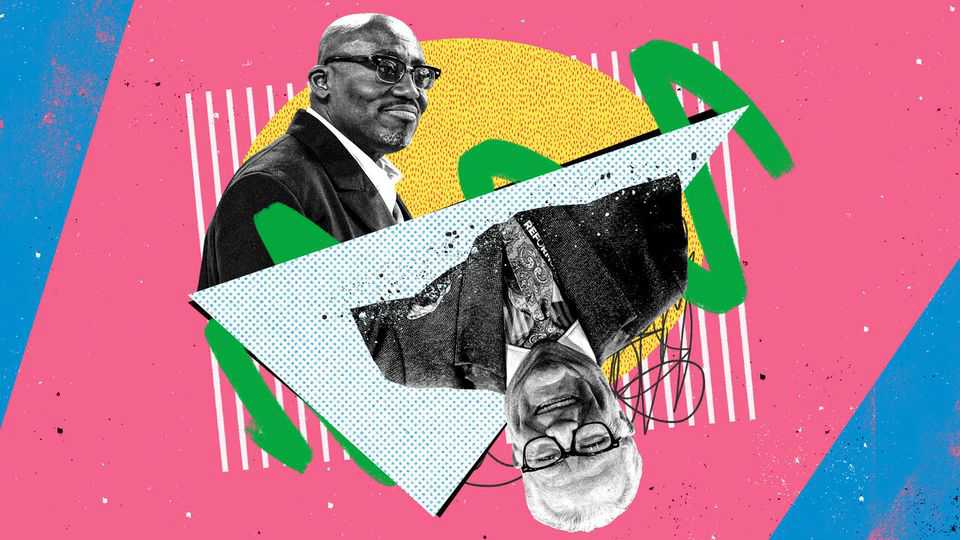
To the Groucho Club! Where else could Tate Britain, an art gallery, announce an upcoming exhibition on “The 90s”? Three decades ago, the Soho haunt was the centre of British cultural life. It is mentioned 42 times in “Faster Than A Cannonball: 1995 and all that”, a luvvies’ history of the era. “I’ve never seen Grouchos in the daytime,” says Edward Enninful, a former editor-in-chief of British Vogue, who is curating the exhibition, in front of a big picture of Kate Moss, a 1990s supermodel. The town house at 45 Dean Street is a corner of Soho that is forever 1995.
What about those who spent their Saturday nights at home during the 1990s, rather than falling out of the Groucho? A skim through the television listings of the time reveals a different decade. They were dominated by Jim Davidson, a right-wing comic who specialised in impressions of black people and harmless smut. “Big Break”, a snooker game show Mr Davidson presented, attracted up to 14m viewers. A rebooted “Jim Davidson’s Generation Game” was the BBC’s main Saturday-night offer from 1995.
If the 1990s are alive in the Groucho, they are still breathing at the Circus Tavern, a venue next door to a petrol station outside Purfleet, where Mr Davidson takes the stage beneath a disco ball. Mr Davidson warms up the crowd of 440 with a slanderous attack on the state of the women in nearby Canvey Island. “No wonder you’ve not got a great deal of illegal immigrants here. There’s no one to sexually assault!” It is still 1995 here, too.
Britain is a prisoner of the 1990s. What that means depends on whether one heads to deepest Soho or deepest Essex. At the Circus Tavern, gay men are “straight off the pink bus”. Jokes are aimed at an audience well-informed enough to know who the secretary of health is, and that he is gay, and ignorant enough to find it inherently funny. But what could be more 1990s? Section 28, which forbade the “promotion” of homosexuality in schools, was repealed only in 2003 (at which point, gay marriage was still a decade away). The 1990s were not always a nice place.
Back at the Groucho, before an audience consisting predominantly of artsy folk in billowing trousers, Mr Enninful, who is himself gay, cited the “emergence of diversity as a creative force” during the decade. Diversity is a creative force for Mr Davidson, too. Much of the second act is dedicated to a trip to an nhs hospital, where he receives shoddy treatment from staff who struggle to speak English. “I don’t want to be racist, so I’m not going to tell you what colour this black woman was,” he says. “Boogaboooga-dayyy-o,” says Mr Davidson. “Dayyy-o,” respond the crowd. The crowd titter; husbands smirk at wives. Mr Davidson offers transgression in a room where everyone agrees. A safe space for those who hate safe spaces.
The 1990s were diffuse, says Mr Enninful in Soho. Their energy came from “communities, practices and places that have not always been equally represented”. If anyone should know this, it is Mr Enninful. Born in Ghana, he became the fashion editor of i-D, an influential magazine, at just 18, in 1991. That same period saw the emergence of another 1990s figure: “Essex Man”, the proverbial aspirational if rather reactionary voter of the decade. He is alive and well at the Circus Tavern, whose car park is filled with fat BMWs. For them, representation is little more than oppression. “You don’t see a white family in the commercials any more,” says Mr Davidson. “No,” shout the crowd in agreement.
Nineties nostalgia hangs over politics. The Labour Party longs for a return to when the party and Britain’s cultural icons were in sync, as they were in the 1990s, rather than regarded with contempt by the Groucho class, as they are now. “I remember the night Tony Blair got in and everybody’s singing, ‘Things Can Only Get Better’, and we really believed it,” recalled the artist Tracey Emin, wistfully, in “Faster Than A Cannonball”.
At the Circus Tavern, politics and culture are comfortably fused. Mr Davidson turns the set into a rally for Reform UK, the right-wing populist party that is now leading in the polls. He begins to sing “Keir Starmer’s a wanker” to the tune of “Seven Nation Army”. An audience where every other man looks like Lee Anderson, a spiky-haired miner-turned-mascot of Reform, soon joins in. Hang on. That is Lee Anderson. The Reform mp has driven three hours to be at Mr Davidson’s show.
In the 1990s old hierarchies were knocked down, says the director of Tate Britain, Alex Farquharson. Mr Davidson’s career in prime time, which began in the 1970s and peaked in the 1990s, dwindled in the 2000s. “The Generation Game” was cancelled in 2002; “Big Break” followed. But new hierarchies were created. Ms Emin, once an enfant terrible, became Dame Tracey; her work “I Want My Time With You”, in neon pink, welcomes visitors from Paris to St Pancras in London, after they have zipped along the high-speed rail line that runs above the trundling service from London to Purfleet. “As it panned out we became the establishment,” said Noel Gallagher of Oasis, the decade’s biggest band, who have just had a lucrative reunion. “And I didn’t really like that.”
Nor it seems did the crowd at the Circus Tavern. “We want our country back,” says Mr Davidson. The crowd agree. For that, they want the 1990s back, too. A world of “men straight off the pink bus” and African accents and Mr Davidson back on telly rather than next to a lorry park in Essex. Rather than something new, Reform is offering a return, cheered on by Mr Davidson. Nineties nostalgia has set like cement in two very different parts of Britain. In both venues, 50-somethings agree that things were better when they were in their 20s. At the Groucho, Mr Enninful says the 1990s is “something still unfolding”. And so it is. From Soho to Purfleet, everybody still wants to live in the 1990s. But which bit? ■