Many celebrities now have book clubs. Most are irritating
They involve a lot of gush—but not a lot of literary criticism
What makes a good literary critic? For centuries writers were in agreement. The critic, Wordsworth noted, was a scornful sort who “frowned” on things. A critic knows, wrote Dorothy Parker, when a book is not “to be tossed aside lightly” but “thrown with great force”. A critic should—as Graham Greene said of all writers—have “a splinter of ice in the heart”. But then Greene had never met Dua Lipa.
Ms Lipa is a British pop star. She is also an increasingly popular literary critic, thanks to her book-club podcast, in which she interviews authors. But Ms Lipa does not have a splinter of ice in her heart. She has something much lovelier. She loves books (“I love books”). She loves storytelling (“I love storytelling”). She loves Helen Garner, an Australian novelist (“I fell in love with you”). She loves Margaret Atwood’s biography (“I loved it. I love it. I love it so much”).
People—including publishing bigwigs—love her back. In 2022 Ms Lipa delivered a speech at the Booker prize, Britain’s most prestigious literary award. She has interviewed a Booker winner (David Szalay) and a Nobel prizewinner (Olga Tokarczuk). In October she will demonstrate “her passion for the written and spoken word” as curator of London Literature Festival.
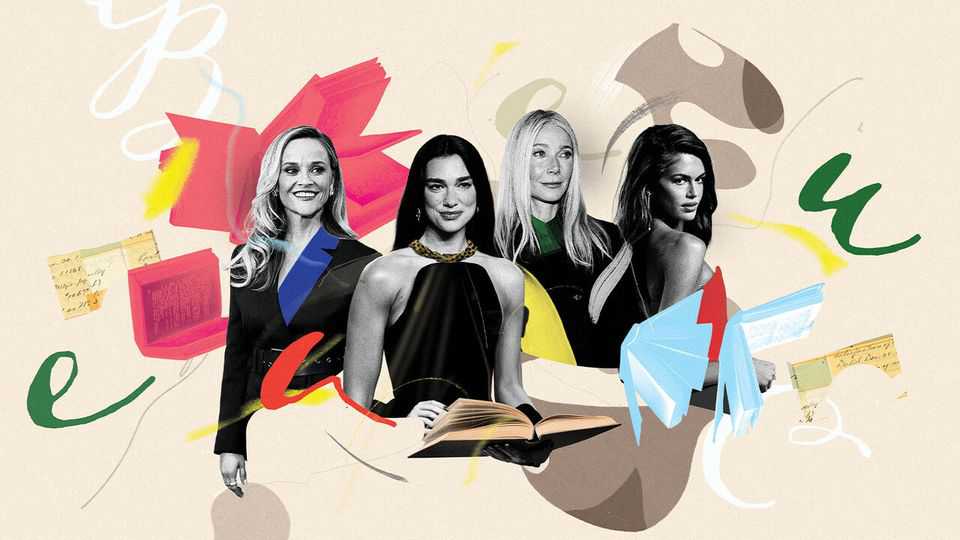
Book clubs are changing. A hobby that was once dull, domestic and faintly frumpy has had a glow-up. Now, anyone who is anyone—and, given the nature of modern celebrity, plenty of people who are almost no one—has a book club, whether podcast, website, YouTube channel or newsletter. Reese Witherspoon, an actor and producer, has a book club. (She is its “book-lover-in-chief”.) Gwyneth Paltrow had a book club as part of her lifestyle brand, Goop. (“Crime and Punishment”, Ms Paltrow declared, is one of her “all-time favourite novels”.) Kaia Gerber, a model, has one with the perplexing aim of “building up our community of rage readers”.
In one way, this feels odd: glamorous, profitable stars used to promote glamorous, profitable things. Ms Lipa also appears in adverts for Nespresso, a coffee brand. Ms Witherspoon was the face of Elizabeth Arden makeup (ever literary, she was the firm’s “Storyteller-in-Chief”). At one time Goop sold a product called “vaginal eggs”—which are tricky to explain but rarely, it is safe to say, trouble the pages of Fyodor Dostoyevsky.
In another way, this is not odd at all. Celebrity book clubs have been popular for nearly a century, and with good reason: they solve so many literary problems. Publishers love them because they help flog books. Amazon has just bought the rights to Oprah Winfrey’s book club.
George Orwell’s “1984” shot up the bestseller lists after being picked by the American “Book of the Month” club. Books picked by Ms Winfrey experience the “Oprah effect” and are grabbed from the shelves. Those picked by Ms Witherspoon experience the “Reese effect”. One choice, “Where the Crawdads Sing”, sold over 12m copies; cannily, Ms Witherspoon then produced a film adaptation of it.
Readers love book clubs because they help them to know which books are actually any good. Last year, over 4m books were published in America alone. It is an open secret in publishing that most of them are either bad or dull or both. Many titles are so dull that a prize has been set up to honour them: contenders for it have included last year’s “Self-Recognition in Fish: Exploring the Mind in Animals” as well as “The 2009-2014 World Outlook for 60-milligram Containers of Fromage Frais”. The reader needs help.
Book clubs also make reading less lonely. You are never alone with a good book, as the saying has it, which is true—and nonsense. You are always alone with a good book: it is the only way to get through it. Emma Smith, a professor at Oxford University, says book clubs translate “a solitary experience…into a collective one”.
Book clubs seem to be socially, financially and intellectually praiseworthy. And so naturally, some high-minded folk loathe them. In the 1920s book clubs were accused of promoting the wrong sort of books (“second-rate” sniffed one) by the wrong sort of person (“middlemen”) to the wrong sort of reader (the “middlebrow”). The “snobbery”, says Nicola Wilson, author of “Recommended!”, a book about book clubs, “goes back a long way”.
Modern critics question celebrities’ motivation, their qualifications and their dedication to the literary cause. Ms Winfrey’s podcast intersperses programmes on books with programmes on “Do Dogs Really Love Us?” and on “Building a Billion-Dollar Brand”. Celebrities, critics say, are just Building That Brand. They are less reading books than accessorising with them on Instagram. In one snap Ms Lipa licks her teeth while holding a copy of Ms Atwood’s biography (typical quote: “Male fantasies, male fantasies, is everything run by male fantasies?”).
Some of this criticism is bunk. Books do not demand a monkish devotion from those who work with them: T.S. Eliot worked in a bank; Anthony Trollope worked for the Post Office. Much of this criticism is old-fashioned intellectual snobbery, as if celebrities are incapable of taxing intellectual endeavour. In 1955, when Marilyn Monroe posed reading James Joyce’s “Ulysses”, the image spawned astonishment, articles and a decades-long debate. As one article put it: was “she actually reading it?”
That being said, certain criticisms seem justified. Some of the celebrities—like Ms Lipa—seem to be promoting books that they genuinely read and love (even if they show that love a little oddly on Instagram). Ms Witherspoon is witty and clever in her choices. Others are effortfully worthy: in her thankfully erstwhile book club, Emma Watson of “Harry Potter” fame offered drivel about “journeys” and tips on “empowering!” books about feminism.
Book clubs, it is true, can be irritating. They are also a little paradoxical. Reading rates are declining rapidly, everywhere. Yet there are podcasts about reading, campaigns about reading and handwringing books about reading. The public seems simultaneously unable to start reading—or to stop banging on about it. Perhaps, instead of listening to people talk about books, you should enjoy books the old-fashioned way. Sit down. Open a book. And silently enjoy it. ■