Does acupuncture work?
It seems useful for pain. The jury’s out on everything else
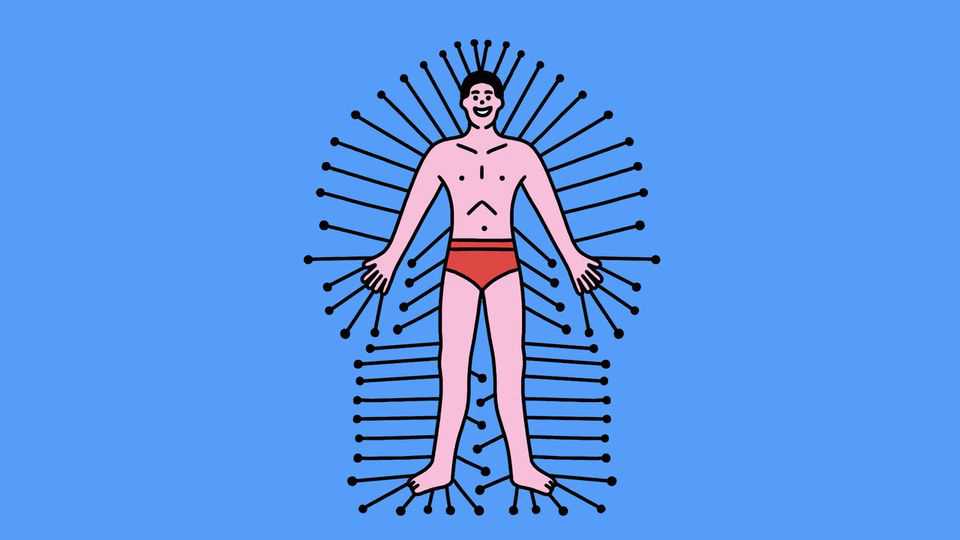
Acupuncture, a Chinese practice thought to be around 3,000 years old, involves sticking needles into certain points on the body in order to promote the proper flow of qi, the body’s vital energy. Although long pooh-poohed by Western medicine, its popularity continues to rise.
Models and influencers tout its anti-ageing effects, and athletes including Serena Williams, a former tennis pro, and Tom Brady, a retired American football player, claim the needles have helped them with muscle recovery. Today acupuncture is used to alleviate ailments ranging from anxiety and asthma to infertility and irritable bowel syndrome. But does it do any good?
On some fronts, the evidence in favour is strong. In 2018 a study in the Journal of Pain analysed the results of 39 randomised trials on 20,827 patients with shoulder pain, chronic musculoskeletal pain, headaches or osteoarthritis. All the patients had undergone either traditional acupuncture, sham acupuncture (a range of placebo controls including the shallow insertion of needles) or no acupuncture at all. When patients assessed their symptoms more than four weeks after initial treatment, acupuncture users reported less pain than those in the other groups. The benefits had not faded by much a year later.
Other studies conducted since then have supported these findings. But how might acupuncture achieve these results? Helene Langevin, retired director of the National Centre for Complementary and Integrative Health at America’s National Institutes of Health (NIH), has a theory. Her research suggests the needles twist strands of connective tissue known as fascia, which in turn pull on nerve endings in a way that might reduce pain.
Some of the positive effects, however, might be due to the brain’s astonishing power to reduce pain when it believes a genuine intervention is being conducted. The more serious the apparent intervention, the greater this placebo response can be. A paper published in JAMA Internal Medicine in 2020, for example, found no significant difference in pain relief between true and sham acupuncture. For Edzard Ernst, an emeritus professor at the University of Exeter who specialises in the study of complementary and alternative medicine, “It is worth remembering that we don’t need a placebo to generate placebo effects—any therapy comes automatically with a placebo effect.” For now, it is hard to identify how much of the benefits of acupuncture may arise in this way.
Beyond pain management, the benefits are less clear. A review published in Complementary Therapies in Medicine in 2022 (written by practising acupuncturists and funded by the International Society of Chinese Medicine) analysed 862 systematic reviews and meta-analyses. It found that acupuncture could reduce post-operative nausea about as well as some antiemetics. It also found benefits for migraines and tension headaches, cancer-related fatigue, female infertility (when used in addition to medical reproductive treatment) and chronic pelvic pain in men. But trials for 86 other conditions, including factors associated with muscle recovery, have not been sufficiently robust to demonstrate any positive effects, while for another six ailments no effect was found.
The balance of evidence means that acupuncture remains a reasonable intervention for chronic pain, particularly because it has far fewer side-effects than most drugs. But for everything else, the effects are hard to pin down. ■