Craig Venter raced to decode the human genome
The dark horse of the Human Genome Project died on April 29th, aged 79
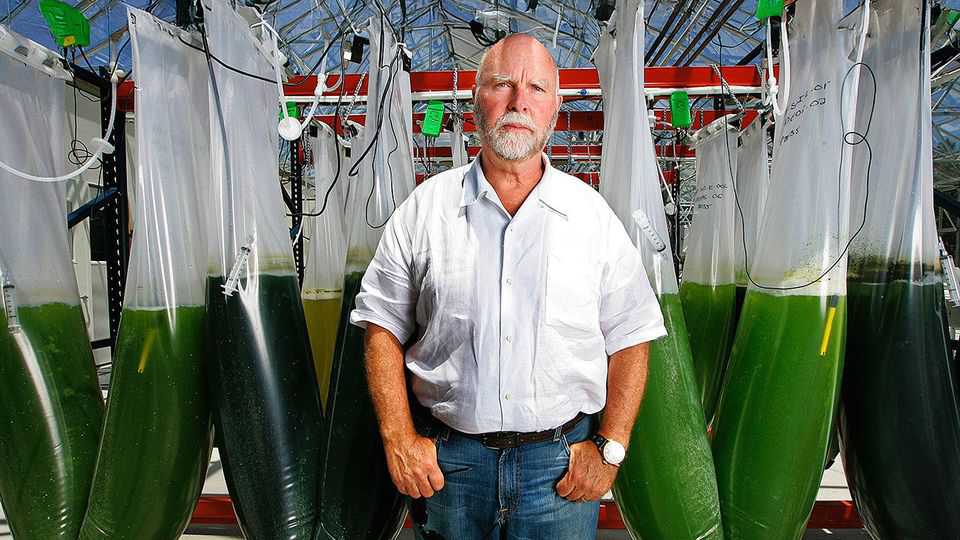
“I have never seen Francis Crick in a modest mood.” Thus James Watson described his collaborator in the unravelling of DNA’s structure in the opening words of his book on that quest, “The Double Helix”. Substitute “Craig Venter” into this sentence and you have the measure of a man who, though not Crick’s equal as a scientist, was in his own opinion only a rung or two below him on the ladder of scientific merit. But he was also one who felt that his worth was never fully recognised, because he was never quite a member of the club.
That, perhaps, is what you get for growing up on the wrong side of the tracks (or, in his case, of the runways at San Francisco airport). Not for him the glittering starts of a PhD at Cambridge or Yale enjoyed by his rivals, John Sulston and Francis Collins, who headed the British and American arms of the “official” Human Genome Project. A beach-bum slacker at high school, he was drafted into the navy as a hospital corpsman during the Vietnam war. Only after a Damascene insight while attempting to drown himself off the coast of Da Nang to escape that conflict’s horrors, did he realise his vocation: if you want immortality, do something meaningful with your life. Illegitimi non carborundum.
The bastards tried. A belated degree and PhD got him into the National Institutes of Health (NIH) as a researcher at the outer fringes of the genome project, which had started, under Watson’s watchful eye, in 1990. The next year he published a neat idea for speeding the project up by tagging where genes sat on chromosomes—so neat that the NIH wanted to patent the results until, after a public storm during which Watson excoriated both Dr Venter’s technology and the whole idea of patenting human genes, they didn’t.
After this, he realised that the only institutions in which he could comfortably operate in future would be those he created himself. So create them he did. First, the Institute for Genomic Research, where, to the chagrin of the powers-that-then-were, he worked out a way to speed things up even more by re-imagining the process of DNA sequencing that lay at the genome project’s heart. Then Celera Genomics, a commercial outfit which sought to use that idea to race, and beat, the official Human Genome Project to the winning post. And then, after the genome was done and dusted and Celera no longer had need of his services, or he of its, the modestly named J. Craig Venter Institute (JCVI).
At Celera’s high point in early 2000 he was a centimillionaire. The real draw, though, was not riches but recognition. From the wider world he got that in spades: feature articles galore, including in The Economist, and his picture on the covers of Time and BusinessWeek, all proudly displayed on the walls of JCVI. But no Nobel prize. His fellow scientists were too frequently among the illegitimi for that to happen.
Sulston, knighted for his services, accused him of wanting to establish a monopoly over the human genome and said he had gone “morally wrong”. This was rich, considering that it was only by adopting his methods that the official project was able to catch up with Dr Venter’s private one, and thus arrive at a politically brokered “tie” in the resulting race.
Dr Collins, with whom he shared the glory in June 2000 when President Bill Clinton announced that tie in the East Room of the White House, was more measured. But he did observe of his rival, “We’ll never find ourselves going out for a beer on Friday nights just for the heck of it...We’re wired in a different way.”
At bottom, in the minds of the Sulstons and Collinses of this world, that wiring had led Dr Venter to sell his soul to the devils of commerce. He, by contrast, regarded Celera’s creation pragmatically, as the only means available to achieve his desired end. As to riches, the easiest way to make a small fortune was to start off with a large one. And a good way to effect that transition was to have an expensive hobby. Which he did. Yachts. Two of them, though not at the same time. He called both Sorcerer. As his second wife, Claire Fraser—herself no mean microbiologist—put it, “We’d be rich, if it weren’t for that boat.”
With Sorcerer the first, he battled both storms and racing competitors. But it was Sorcerer II that truly revealed the man, for she was fitted out for science rather than sailing competitions. By permitting him leisurely transoceanic cruises, sampling the DNA of what was living in the waters she traversed, she combined business with pleasure—recapitulating, in luxurious style, the 19th-century circumnavigations of HMS Beagle and HMS Challenger.
More science followed: the first synthetic bacterial genome; a stripped-down “minimal” genome that is the smallest a microbe can get away with and remain alive; and numerous, though ultimately unprofitable, excursions into the elusive field of synthetic biology, in which living organisms will be rebuilt, the better to serve human needs.
Ironically, considering his epiphany in the South China Sea, his last Big Idea was life extension—the real sort, not the reputational. First, in 2013, he helped found Human Longevity, a firm that proposed to extend human lifespans by understanding and subverting the biological processes of ageing. That lasted five years before he parted company with it, either (depending on who you talk to) by storming out or being fired.
Then, this January, he had another go with a venture called Diploid Genomics, after the paired chromosomes of human cells in which he felt the secrets of longevity lay. However, though he himself was prodded, poked and scanned to the nth degree during his time at Human Longevity—and said such attention to detail had saved him from undetected prostate cancer—in the end it was to no avail. Still, he had indeed done something meaningful with his life. And the bastards had certainly not ground him down. ■