Britain’s teenagers deserve better help getting equipped to vote
Time to invest in citizenship education
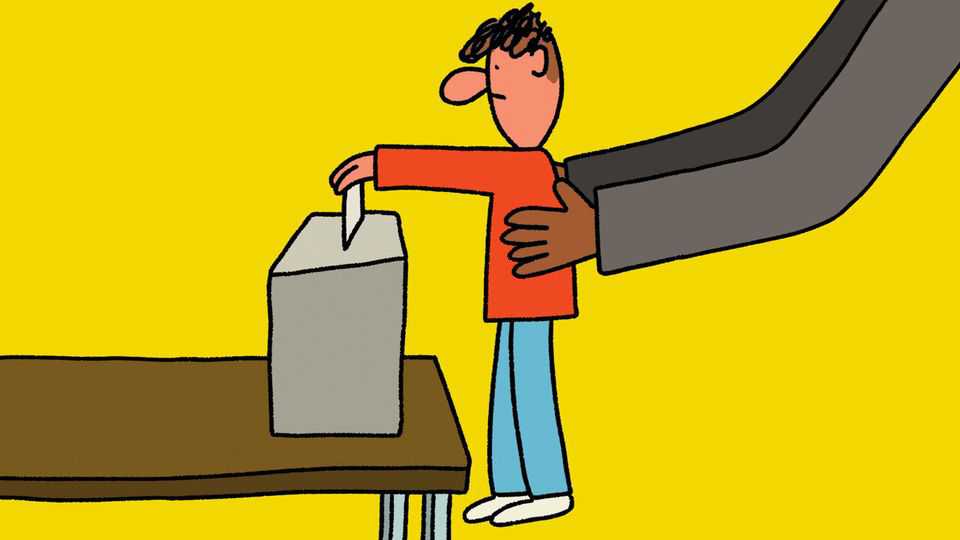
“At 16, we can sleep with our MP,” ventured James Evans, in a 2009 UK Youth Parliament debate in the House of Commons, but “we are not mature enough to vote for them.” That is going to change, as legislation to lower the voting age to 16 makes its way through Parliament. Though Scotland and Wales already allow 16-year-olds to vote in devolved elections, Britain will become only the third European country, after Austria and Malta, to let them vote in national ones.
Already, 16-year-olds pay tax, can leave home and join the armed forces (though they cannot be deployed). But “lowering the voting age is only half the battle,” notes Christopher Pich of the University of Nottingham. The other half is increasing the quality of voters.
Turnout among British youth is woeful. Just 37% of all 18- to 24-year-olds voted in the last general election in 2024, according to Ipsos, a pollster. That compares with 82% of 18- to 29-year-olds who voted in Sweden’s 2022 election.
In a recent study, led by Alistair Ross of London Metropolitan University, of British 14- and 15-year-olds across 120 schools, a quarter of students had “no real idea” what Britain’s political parties stand for. Others were unclear about the mechanics of voting: how the first-past-the-post system works, what a constituency is or the need for photo-ID. Yet young people are twice as likely to plan to vote if they feel more informed about political issues, according to a survey in 2024 by Young Citizens, a charity.
Citizenship education, which includes study of politics and democracy, was introduced to England’s curriculum only in 2002, following a review four years earlier. It was the last country in the civilised world to do so, according to the late Sir Bernard Crick, who led the review. It has rarely been a priority in crowded timetables since. And with 83% of secondary schools now academies or free schools that do not have to follow the national curriculum, provision is patchy.
A House of Commons review of the 2024 general election recommended a “complete overhaul of political education”. Academies will soon have to follow the national curriculum and citizenship education will become compulsory for primary schools too. Ideally it is to be delivered as a weekly stand-alone subject at secondary level. Though understanding the basics of democratic systems is important, education types agree that the treatment of the subject in schools should be broader—Crick lambasted “amazingly boring” foreign curriculums that mandated learning the constitution by heart.
Instead, a favoured approach is one that builds not just young people’s knowledge but their skills to discuss complex issues and to cut through misinformation. Hands-on experience helps. One example are the youth elections held in Norway and Finland, recently replicated in Britain by the Association for Citizenship Teaching. (“It’s like the fieldwork bit of geography,” says Liz Moorse, the organisation’s chief). Students joined manifesto teams, campaign teams, even “comms” teams, and held an “election” on the same day as Britain’s general election in July 2024. Some 30,000 votes from 400 schools were registered; Labour triumphed over Reform UK.
Big hurdles remain, however. Only 1% of teachers feel fully equipped to teach political literacy, according to a study of more than 3,000 teachers, led by James Weinberg of the University of Sheffield in 2021. The reforms to the curriculum that will make citizenship education more widespread will not be rolled out until September 2028, too late for students who will be eligible to vote in the next general election (which has to be held before August 2029).
And some teachers worry that the subject can turn toxic. Impartiality when teaching about political parties is a minefield. It is “the first, second and last thing people talk to us about”, says Harriet Andrews, director of the Politics Project, which supports education in democracy for young people.
Many controversial topics are avoided in schools as teachers are anxious about straying into politics. But according to a recent survey by The Economist Educational Foundation, an independent charity backed by The Economist, 61% of 15- to 17-year-olds say they would feel readier to vote if they knew more about different political views. And 44% say they do not feel ready to vote in the next election. ■