America is massing troops near Taiwan to deter troublemaking by China
The timing of annual exercises is set by weather patterns favourable to any possible invasion
FOR MOST of the year, the strait between Taiwan and mainland China is a violent place. Gale-force winds howl across its 160km width, whipping up high seas in the autumn and winter. In the summer, strong currents and the occasional typhoon make crossings perilous. But for several weeks in April and May, and again in September and October, a layer of fog descends over the Taiwan Strait and it becomes calm. For American military planners, that makes it even more dangerous: if China were ever to attempt an invasion, their thinking goes, it would come in one of those two windows.
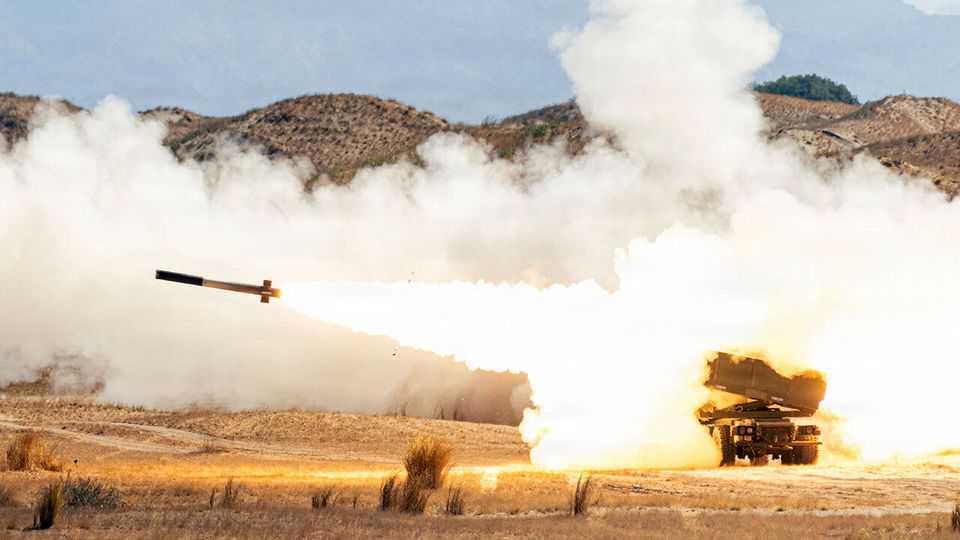
It is no coincidence, then, that America has been massing troops nearby this spring. Around 10,000 of them are in the Philippines for a series of annual exercises that began in April. On May 4th, at the La Paz sand dunes along the country’s northern coast, thousands of soldiers took up positions along the length of a sandy beach. Your correspondent witnessed them practise repulsing an amphibious invasion by an enemy they called the “Red Team”. An American artillery brigade fired HIMARS rockets at targets far out at sea, while Apache helicopters strafed targets closer in. Soldiers on the beach fired at airborne and seaborne drones coming ashore.
These are opportunities to train, say officials. They are also a deliberate positioning of troops and equipment at the time and place where they are most useful in deterring China in the Taiwan Strait. Similar exercises take place in Japan’s southern island chain, close to Taiwan, during the other window for fair seas in September. Both the Philippines and Japan reckon that, if war breaks out between America and China over Taiwan, their proximity means they will be unable to stay out of it.
Some in Asia worry that Donald Trump might dilute America’s commitment to Taiwan’s defence as part of a deal with China following his upcoming summit with Xi Jinping. But this year America sent around 1,000 more troops to the Philippines for the exercise than it did last year, despite concerns that its war on Iran might affect its ability to deter a Chinese attack in the Pacific. On May 6th America test-fired a Tomahawk cruise missile from Philippine territory for the first time, even though the missiles are in short supply due to America’s burn rate in the Persian Gulf. With its 1,600km range, the Tomahawk could reach most of the Taiwan Strait from Philippine territory. “I’m not concerned at all about reduced deterrence,” Gilbert Teodoro, the Philippines’ defence minister, told Reuters last month. But he warned that if China saw “a perceived weakness or a perceived opening, they will take advantage”
Perhaps as a hedge against the perception of American distraction or abandonment, the Philippines has invited other countries to get involved in this year’s exercise. Japanese ships form the largest part of the foreign naval contingent, and Japanese ground troops are participating for the first time. In the counter-landing exercise on May 4th they defended beaches that they once occupied in the second world war, as did soldiers from the storied Princess Patricia’s Canadian Light Infantry. Australian, French and New Zealand troops are taking part in other elements of the drills. That is partly the result of a campaign by the Philippine president, Ferdinand “Bongbong” Marcos, Jr to get other countries involved in the defence of the Philippines. Mr Marcos, who is increasingly outspoken about the threat from China, wants to signal that its concerns about Chinese aggression are not just a result of its alliance with America.
Much of this year’s exercise, including the live-fire drill on La Paz sand dunes, has been held in the longtime Marcos family stronghold of Ilocos Norte near the Taiwan Strait. But what will happen after Mr Marcos leaves office in June 2028? The front-runner to succeed him is Sara Duterte, the daughter of Mr Marcos’s far more China-friendly predecessor, Rodrigo Duterte. If she becomes president, the future of the exercises will be in doubt. American troops might have to find another way to stay close this time of year.■