Airlines are grappling with dwindling supplies of jet fuel
Yet it is unclear where shortages will hit first and hardest
A commercial jet zooming at 500 knots (575mph) and the stately progress of a tanker cruising at 15 knots yield journey times from the Persian Gulf to Europe measured either in hours or weeks. The difference belies a fundamental connection. The near complete closure of the Strait of Hormuz has prevented both jet fuel and the crude oil from which it is refined from exiting the Gulf, sending prices into a rapid climb.
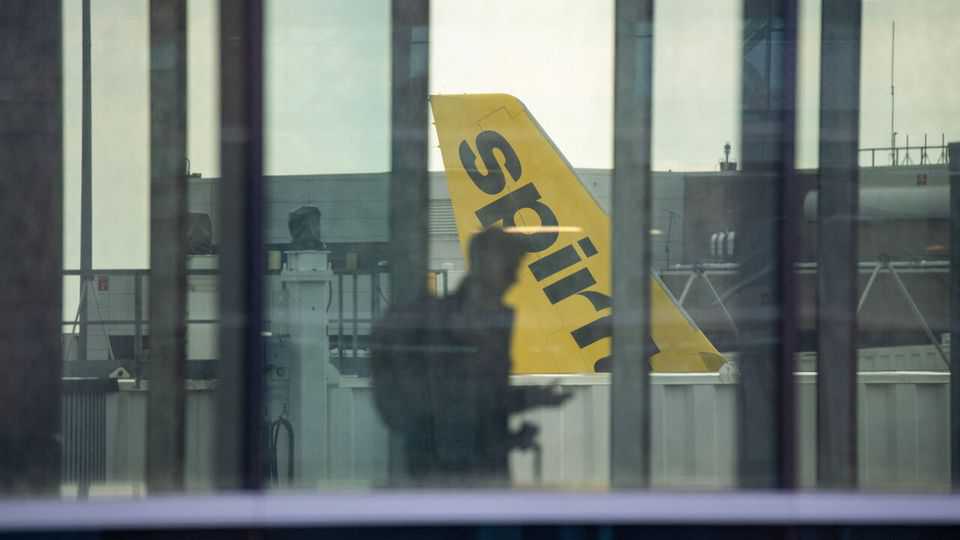
Since the conflict with Iran began, the cost of filling up a plane has thus soared (see chart). That has already claimed one corporate victim. Spirit Airlines, an American low-cost carrier in bankruptcy protection, ceased operating on May 2nd. Its finances, strained by stiffening competition from big network carriers, buckled under the weight of rising fuel costs.
Other airlines have put up ticket prices, added fuel surcharges and cancelled flights that would no longer have been profitable. Among those to have cut flights are Europe’s Lufthansa and Air France-klm; America’s United and Delta; and South-East Asia’s Vietjet and AirAsia. In the second half of April the global volume of flights scheduled for May fell by 13,000, according to Cirium, a data provider.
Further down the runway, however, the number of flights is still set to increase by 3-6% in the summer compared with last year, according to Goldman Sachs, a bank. That hardly accords with the availability of jet fuel. Demand averaged around 7.8m barrels per day (b/d) in 2025, according to Société Générale, a bank. Of that, 2m b/d was internationally traded, with 360,000 coming through the Strait of Hormuz. Lack of supply to Asian refineries that rely on Gulf crude to produce jet fuel may create a further shortfall of 800,000 b/d in May, says the bank. Together that adds up to some 15% of total demand.
What explains the disconnect between looming shortages and expanding schedules? As Andrew Charlton of Aviation Advocacy, a consultancy, explains, the last thing to change will be “optimistic messages” from airlines that need to keep selling tickets to maintain cashflow. But it also remains unclear where shortages will hit first and hardest.
America, the world’s biggest aviation market, should on the whole remain well supplied. The country is a big oil producer and refiner. Yet it is not entirely immune. Stocks are running down on the West Coast, which is not connected to the web of jet-fuel pipelines between refineries and airports east of the Rocky Mountains. Imports to that side of the country account for nearly a fifth of supplies, with 85% from South Korea, which is now struggling with the loss of crude from the Gulf.
The impact on Europe and Asia, which are more exposed than America, is also uneven. Europe burns 1.6m b/d of jet fuel and imports around a third of its needs, three-quarters of which has come from the Gulf. Yet whereas Britain imports around 65% of its requirement, Greece and the Netherlands are net exporters. The outlook in Asia is similarly mixed. China is a large exporter, but curbs on its trade may leave the likes of Australia and Vietnam facing shortages unless they stump up for jet fuel from elsewhere.
Stock buffers also differ widely, as Europe’s case shows. The continent in total holds 38 days of commercial stock, climbing to 57 days once government reserves are added. But Britain, which has no strategic reserve, now has a stock of just 29 days of jet fuel, according to Goldman Sachs. For Portugal the figure has fallen to 23 days. That is the level at which the International Energy Agency, an inter-governmental body, reckons that rationing starts to be required.
Shifts in trade flows since the start of the war have further complicated matters. High prices have incentivised American refiners to start producing more jet fuel. Seaborne exports from the country have grown by three-fifths, to 280,000 b/d, with 110,000 b/d of that coming to Europe on average in March and April, up from a trickle before. With European airlines prepared to pay more, American exports to Asia have all but ceased. Carriers in the region might get some relief by tapping Indian refiners, which cannot supply European customers owing to the use of sanctioned Russian crude as a feedstock. But India’s government could limit exports.
As the busy summer season approaches, then, it is difficult to tell whose holidays will be spoiled by the jet-fuel shortage. A reopening of the Strait of Hormuz would provide some hope, though it would take time to restore normal trade, especially as infrastructure has been damaged during the conflict. If it remains shut for an extended period, the price of jet fuel would need to increase to levels that would deter significant numbers of passengers from flying. It would be no surprise if a few more carriers follow Spirit to the afterlife. ■