Time to edit some biological metaphors
Not everything is in your DNA
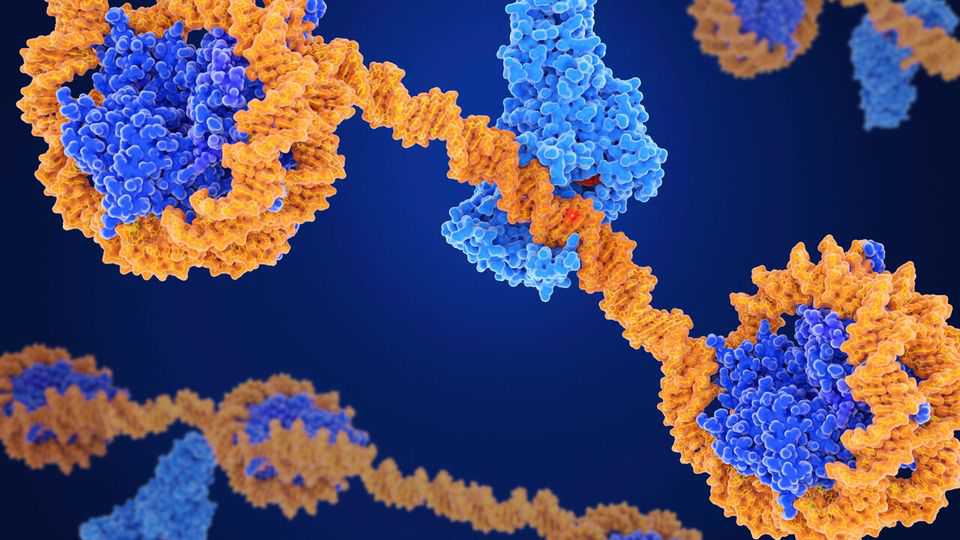
THE DISCOVERY that the coils of DNA inside cells carried specific instructions for making all the proteins those cells need was the founding achievement of molecular biology. It allowed a new understanding of genetics in terms of physical molecules and abstract information. It provided new ways of diagnosing disease and, through biotechnology, of producing medicines. It furnished profound insights into life’s past evolution. From nociception to nephrology, few if any fields of biology have not benefited from these insights; some have been utterly transformed.
The effect of deoxyribonucleic acid’s role as genetic material on the world of metaphor has been less welcome. When applied to the non-living—“perfect customer service is in our DNA”—the allusion is merely silly. Closer to the biological, it is pernicious. Just as appeals to “instinct” are used to mask unexamined prejudices, so claims that something is “in my DNA” are used to ward off inquiry into whys or wherefores. They are ”just because” dressed up as science. To the extent that they suggest a human being’s deepest self is engraved on some immutable molecule, they come close to notions of biology as destiny.
Sometimes such assumptions can seem anodyne. On April 26th, at the London Marathon, Sabastian Sawe, a Kenyan athlete, finished in less than two hours; in the 2,515 years since the first Marathon, no one else has been recorded as achieving such a time in competition. Many seeing this achievement will have thought something like “it’s in his east African genes”—not so much to belittle the achievement, as to have a ready reason for it. Such pat accounts can make it easy to stumble down the slippery slope that ends with ascriptions of innate superiority and inferiority: of Somalis being “low IQ people” and similar claptrap.
This is one reason new interest in the field of epigenomic medicine is welcome. The epigenome is a set of markers on an organism’s DNA and its accoutrements that tell “transcription factors” and other molecular machinery which bits they should pay attention to. Such labelling can be changed by environments and events; it can also sometimes be passed on from one generation to the next. And it can make huge differences. Genetically identical mice with different epigenomic markings can differ in colour, size and morbidity. An epigenomic tag on a given gene can be the difference between a healthy human and a sick one.
Various biotech companies are now using techniques like those with which gene editors change specific sequences of DNA to try to change specific epigenomic tags while leaving the DNA sequence itself untouched. Success would be good news for sufferers of some metabolic disorders and chronic viral conditions. In the future broader applications may come about—some debilities of ageing seem to be brought about by epigenomic wear and tear.
Measured against such benefits, the possibility that epigenomic medicine might also serve to weaken an irksome cliché is small beer. But it could still be a welcome side-effect. In a world where such treatments are more discussed, the idea that the expression, and thus effect, of a gene differs according to circumstances could become more widely appreciated.
So could possibilities for self-improvement. The interplay of culture, commerce, environment and, possibly, genetics behind the success of east African distance runners will remain complex, and open to different interpretations. But there is no doubt that specific types of exercise have effects on the epigenome. Whatever is in his genes, Mr Sawe’s dedicated training is what brought it out. (None of which is to say his high-tech shoes didn’t also have something to do with it, too: the ways in which ingenuity can enhance biology are endless.)
Despite its potential, though, it would be wrong to expect too much of a boost for better biological metaphors from epigenomic medicine. Humans have a tendency to avoid the cognitive burdens of complexity, sometimes for good reasons, sometimes for bad ones. They are as happy to do it through mysticism as materialism: if they don’t do it by invoking nucleotide sequences they will appeal to fate, or destiny. It would be nice if they did not; but there is little reason to expect them to change. It is almost as if the propensity to essentialise was in their…■