The staggering strangeness of the Labubu bubble
Want a scary elf doll? That’ll be $150,000
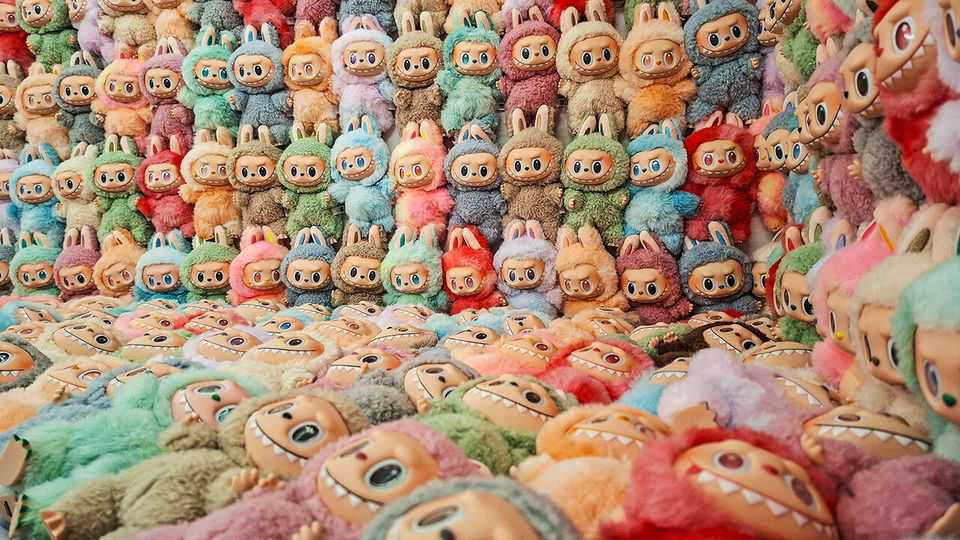
Imagine a baby elf in a onesie. Now imagine that it has had its teeth sharpened and been possessed by the devil: that gives you a sense of the aesthetic of a Labubu doll. Lots of Labubu-lovers sport the creatures on keychains, but you can get a 40-inch Mega Labubu at a Pop Mart shop in London for £850 ($1,150). Why anyone would buy it for even a tenth of that price is beyond your correspondent.
Compared with some Labubus, however, it is a steal. In June a Chinese auction house sold a four-foot-tall Labubu (confusingly described as “human-sized”) for $150,000. You can forget about precious metals, cryptocurrencies and the stocks of companies planning to launch data centres in space. This is far and away the weirdest speculative mania out there.
Talking about a bubble in Labubu dolls puts a strain on the category. In financial markets, a bubble forms when an asset’s price rises to a level that could not possibly be justified by fundamentals. (Think of euphoric traders bidding up a company’s equity value to hundreds or thousands of times its underlying annual earnings.) For some assets, it is famously difficult to pin these down—as with gold, which generates no cash flows and yet has been prized as a store of value for millennia. Creepy elf dolls take the problem a step further. How can you tell whether prices are out of whack with fundamentals if there aren’t any to begin with?
The Mega Labubu suggests that exuberance still reigns over the doll market. Yet things are less manic than they were. Google searches for “Labubu” have fallen by over 90% globally since July. The share price of Pop Mart, the Chinese company that makes them, is around half its peak in August. “If I get a delivery on a Saturday morning, it’s still gone by the afternoon,” says a shop assistant in London, “but people aren’t queuing up outside any more.” That marks a comedown from a frenzied period last summer when Labubu fans queued for hours outside the shop to participate in weekly raffles.
“In a boom, fortunes are made, individuals wax greedy, and swindlers come forward to exploit that greed,” wrote Charles Kindleberger in “Manias, Panics and Crashes” (1978), his classic history of financial crises. Labubumania has been no different—but rather than fraud and embezzlement, it has produced the “Lafufu”, or counterfeit Labubu. The swindlers of the 19th century sold worthless shares in non-existent railways; today’s sell fluffy dolls with sloppy paint jobs and the wrong number of teeth. (A true Labubu has nine.) During the first nine months of 2025 British officials seized shipments of fake toys worth £3.5m at the country’s borders, 90% of which were Lafufus.
According to the old share-traders’ adage, bull markets do not die of old age: they are murdered by central banks. But the laws of one asset class do not always apply to others, and the bull market in Labubus was murdered by Pop Mart itself. Last year it expanded production of plush toys (which include Labubus) by a factor of ten, to around 30m a month. The secondary market—of people snapping up scarce dolls to sell them on at big mark-ups—thus lost its raison d’être for all but the rarest Labubus, and has collapsed.
That might be no bad thing for Pop Mart, which makes plenty of other cute yet mildly disturbing dolls. The company does not want to be a one-hit wonder, and the secondary market it really cares about is that for its own shares. Rabid speculation in Labubus, despite boosting sales, may not have reassured Pop Mart’s own investors of persistent, reliable returns. Unlike the crashes covered in Kindleberger’s history book, the bursting of this bubble is unlikely to have many knock-on effects beyond a few scalpers losing their shirts. Though if your heart is set on a Mega Labubu, it may soon be a good time to get your hands on one. ■