The lack of progress in Gaza suits those in power
But it leaves Gazans in misery
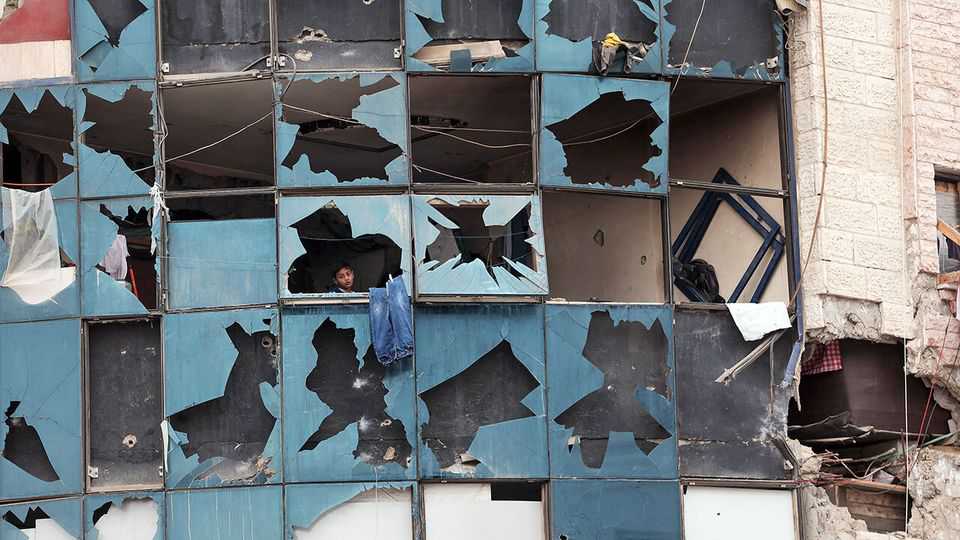
Only the rats roam free. They breed in the mounds of rubbish and scuttle through the threadbare tents and rubble in which most Gazans now live. Stockpiles of pipes to repair the sewage and water mains damaged in the war sit out of reach, in the more than half of Gaza controlled by Israel. Israel continues to bar the entry of many items required for repairs, often claiming they are “dual use” and could have some military purpose, as well as caravans, tents—and rat poison. Electricity and proper schooling vanished more than two years ago. Hospitals and universities lie in ruins. And despite the ceasefire, Israeli strikes continue. More than 750 people have been killed since Donald Trump announced a truce nearly seven months ago.
The ceasefire came with a 20-point plan that promised relief for the devastated strip. “Full aid”, it decreed, “will immediately be sent into Gaza.” Reconstruction of essential infrastructure and public services was supposed to begin. Israel would reopen crossings to let at least 600 lorries with humanitarian supplies enter every day. Normal movement across the Egyptian border would be restored. Meanwhile, Hamas, the Islamist militia in Gaza, would begin to disarm. Israeli forces would withdraw as international ones arrived. And a new technocratic Palestinian body, the National Committee for the Administration of Gaza (ncag), would assume control.
These were fine aims. But they remain just that. Instead, a grim limbo has set in that suits many in power. Israel is extending its grip on the territory. Some of its leaders seem to hope that conditions in Gaza will become so intolerable that its inhabitants leave. The flow of aid is limited. Hamas clings to what is left of its authority in a shrinking enclave. It is raising already-steep prices on petrol and engine oil to extract enough revenue to pay salaries.
In the Israeli-occupied West Bank, Mahmoud Abbas, the nonagenarian president of the Palestinian Authority, fears for the fragmentation of his realm. He shows little appetite for separately administering Gaza. Mr Trump and key members of his Board of Peace are busy with Iran and loth to confront Israel. “They’re all buying time,” says a despairing Palestinian analyst working with a Western embassy.
A few are finding comfort in the limbo. Members of ncag who should be implementing the “beautiful” plan Mr Trump announced to a fanfare in Davos, lounge poolside in a posh Cairo hotel. Many are skilled engineers who expected to go to Gaza two weeks after their appointment in January. Instead Nickolay Mladenov, a former Bulgarian defence minister now serving as the Board of Peace’s “high representative” for Gaza, keeps them in Cairo, controlling their movements and communications. (The bland ncag website still wishes readers Happy Ramadan and Easter.) “We don’t have the tools to do anything,” admits one, speaking despite a ban on media contact. “No one tells us what is happening. We cannot serve our people.”
Meanwhile only 1,000 members of a planned 25,000-strong Palestinian civil police force have been approved by Israel. Training has yet to begin.
For Israel and Mr Mladenov, Hamas’s disarmament is the main stumbling block to progress. Mr Mladenov has repeatedly convened Hamas’s exiled members in Cairo, alongside Turkish, Qatari and Egyptian mediators, and urged them to turn themselves into an unarmed political party. As such, they would issue a statement of their intent to disarm, then disclose their stockpiles of heavy weapons and the locations of their workshops and tunnels. The process would end with the handover of arms—perhaps to the ncag.
Hamas, however, has its own conditions: Israel must withdraw from Gaza; all other armed factions, including the gangs under Israel’s control, must also disarm; Hamas’s civil servants must be absorbed into any new administration; and Mr Trump must promise a Palestinian state. Few trust Israel to withdraw from Gaza entirely. Israel meets each concession, say Hamas officials, with a new demand. And it is reluctant to fulfil its obligations under Phase I of Mr Trump’s plan: to permit the entry of mobile homes and the rebuilding of vital infrastructure.
Even if Hamas’s leaders, mostly now in exile in Istanbul, agree to give up their weapons, their fighters in Gaza, the al-Qassam Brigades, may refuse to comply. Israel has killed perhaps 10,000 militants, but analysts in Gaza reckon 20,000 remain. Many in Hamas fear they will be attacked by their Palestinian opponents if they relinquish their arsenal.
Moreover, Hamas is still guided by the hardline approach of Yahya Sinwar, its late leader and architect of the slaughter of October 7th. In the past, Hamas has elected new leaders. This time it has filled its ranks by istimzaj, or consultation, which favours continuity over reform. Deputies have replaced their bosses. Iran’s resilience in the face of American and Israeli attack has emboldened them. A recent municipal election in Gaza’s Deir al-Balah city was marked by low turnout but Hamas-aligned figures kept control. “Sinwar’s ghost still rules,” says a Gazan observer. “The war did nothing to change them”
More talks in Cairo may yet break the deadlock. Mr Mladenov has in recent days put forward another proposed timetable and plan. But the region offers a consistent lesson: those who control territory are reluctant to relinquish it, whatever the human cost. That leaves Gazans trapped in the ruins—and the rats untroubled. ■