The government’s lawsuit against the Southern Poverty Law Center is bonkers
But the non-profit had badly lost its way
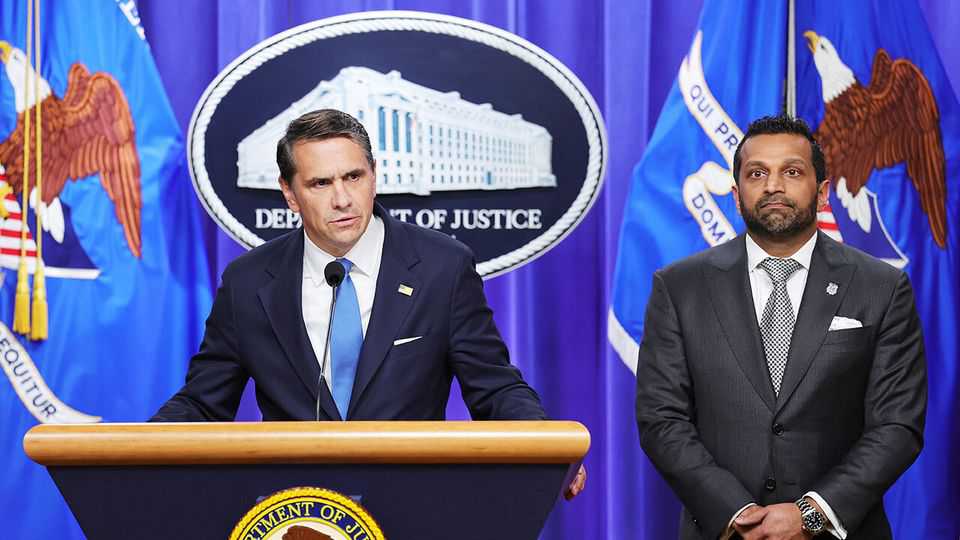
The president likes to applaud the work of his underlings—especially when they are taking down his enemies. Days after the Department of Justice indicted the Southern Poverty Law Centre (SPLC), a progressive non-profit, on wire-fraud charges, Donald Trump took to Truth Social. The defendant, he wrote on April 24th, is “one of the greatest political scams in American history”. If the allegations prove true, he added, “the 2020 election should be permanently wiped from the books.”
You could forgive someone who follows politics closely for being confused. The SPLC does not take part in political races. Instead, it is in the business of keeping tabs on America’s hate groups and suing on behalf of their victims. But in recent years the non-profit has become one of the right’s favourite bogeymen. Founded in Alabama in the 1970s to fight poverty and racism, it drew lots of justified criticism when it began labelling more mainstream conservative groups and people, such as the Family Research Council, Moms for Liberty and Ayaan Hirsi Ali, a writer, as dangerous extremists.
After Charlie Kirk was assassinated in September, it vaulted to the top of MAGA’s enemy list. Elon Musk blamed it for inciting the killing by criticising Mr Kirk in a “Hatewatch” newsletter and branding his organisation as “authoritarian”. That same month Kash Patel, the FBI director, called the SPLC a “partisan smear machine” and cut the agency’s longstanding ties with it. Now Mr Trump’s fiercest lawyers are taking aim at a once-great organisation, too.
In the series of attacks on the president’s foes, this may be the sloppiest yet. Federal prosecutors accuse the SPLC of “manufacturing” the very racism it purports to be fighting. In a 14-page indictment, they allege that the non-profit defrauded donors by not disclosing that it paid a network of informants inside far-right groups. Between 2014 and 2023 it used fake bank accounts, the document explains, to secretly funnel more than $3m to an officer of the Aryan Nations, the president of American Front and an Imperial Wizard of the Ku Klux Klan, among others. The SPLC has so far not denied the facts in the charges—but it said in court that the government was in on it all along.
Using informants to gather intelligence to catch criminals is not just lawful but deeply embedded, and even incentivised, in the legal system, says Alexandra Natapoff of Harvard Law School. The FBI itself regularly pays and relies on snitches. In a rules handbook, the Justice Department even outlines the kinds of crimes the feds are allowed to authorise informants to commit on the job: acts of violence and witness-tampering, no; drug dealing, selling stolen goods and insider trading, yes.
But the SPLC is a non-profit, not a law agency. And the administration’s case is not really about its tactics, however shocking they may be. For the fraud and money-laundering charges to stick, prosecutors will have to show either that the non-profit made explicitly false statements to donors or that it had a clear legal duty to disclose information, as a doctor would to a patient or a lawyer to a client. Samuel Buell of Duke University reckons they will probably not have much of a shot at either.
The flimsy legal argument, however, is not the worst part of the lawsuit. In outlining the SPLC’s alleged crime, the government describes some of the informants the non-profit tapped, presumably gleaned from a shared intelligence file from long ago. Eight short portraits give enough detail about them—a Klan member and her spouse, an “Exalted Cyclops”, who together were involved in an “Adopt-a-Highway” lawsuit, for example—to allow your correspondent to identify at least four by name after five minutes of Googling.
Exposing these people on a public docket risks getting them killed. The world that the informants operate in is rife with violence, and there is no greater betrayal than snitching. Enrique Tarrio, the pardoned leader of the Proud Boys, a far-right club that the SPLC has tracked closely for years, told The Economist that he would “love” the case to go to trial so he could see if there were any informants in his organisation. “Would I want to beat that guy’s ass? Yes, but that’s assault and I value my fucking freedom,” he says. “But some of these groups started as prison gangs and they’ll put a knife in your belly for crossing them on the TV.”
The Justice Department’s callousness sends several messages. To non-profits thinking about collaborating with the government, it shows that this administration cannot be trusted with sensitive tips. To insiders in criminal rings it signals that striking a deal to get money or impunity now carries greater risks. The upshot of this lawsuit could be that America blunts one of its most effective tools for gathering intelligence on domestic threats. To do so in pursuit of one president’s political vendetta may prove to be costly.■