The fashion influencer speaking truth to Putin
A viral Instagram video brings Russians’ wider grumbling into the open
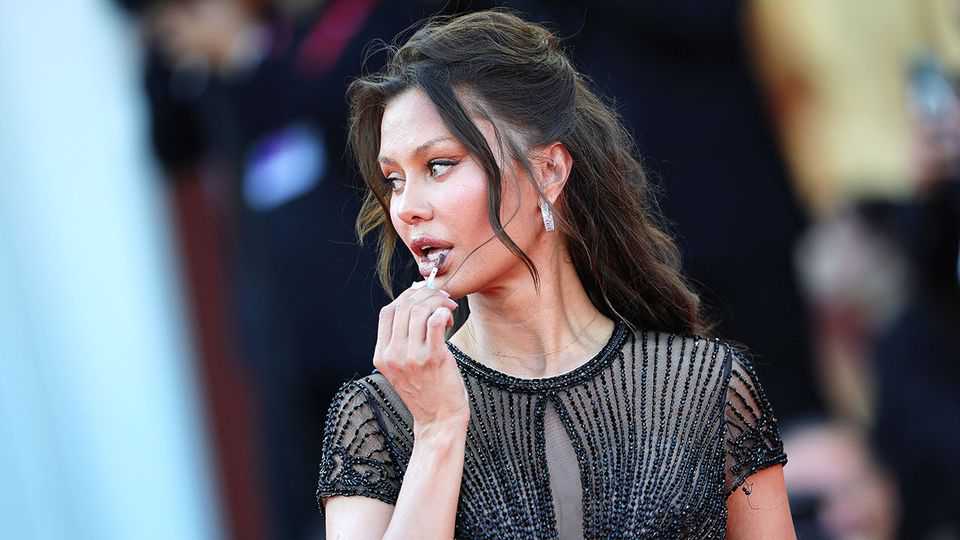
SHE IS NOT an opposition politician, activist or journalist. Victoria Bonya is a Russian former television presenter turned influencer living near Monaco. She promotes fitness routines and her brand of vegan cosmetics and clothing to 13m subscribers on Instagram, most of them in Russia. But on April 13th she caused an explosion in Russian politics with an 18-minute video appealing to Vladimir Putin to heed popular complaints. “Vladimir Vladimirovich, the people are afraid of you,” Ms Bonya said. “I am not afraid.”
Ms Bonya listed a series of grievances—the inadequate response to deadly floods in Dagestan in early April, repeated oil spills in the Black Sea and cattle culls depriving Siberian villages of their livelihood. She then turned to recent internet restrictions and bans on social-media platforms such as Instagram, the source of her own income. Within hours her video had clocked 10m views, in a country with a population of 145m. Seemingly half the personalities in Russian public life commented on it. Gennady Zyuganov, the leader of the quasi-opposition Communist Party, said the Kremlin should take it seriously to avoid another Bolshevik revolution.
The regime’s response was at first mixed. Dmitry Peskov, Mr Putin’s press secretary, acknowledged Ms Bonya’s concerns were legitimate. Vladimir Solovyov, one of Mr Putin’s more rabid TV propagandists, called her a “worn-out slut”. Yet Mr Solovyov was soon instructed to apologise to her on air. The Kremlin did what it could to ease the controversy—a tacit recognition that the video had tapped into a growing wave of popular discontent.
Ms Bonya’s video followed the traditional Russian genre of a petition by a concerned subject to the good tsar, the only safe form of public criticism. She avoided mentioning Russia’s war on Ukraine, and said little that ordinary citizens did not already know. But the viral reaction was more telling than the content. As someone who makes her living by picking up on trends, she captured disaffection not among the anti-war minority but among the so-far disengaged majority, which as in most countries is largely apolitical.
Most Russians have never shown great enthusiasm for Mr Putin’s war on Ukraine. Public disengagement, made possible by the use of mercenaries rather than conscripts, allowed the Kremlin to preserve a façade of normality. Most Russians said they “supported” the war simply to avoid personal consequences. They also told pollsters they wanted it over soon. The reaction to Ms Bonya’s video showed that even the loyalist majority is souring on the situation. The mood began to shift last year, when hope for an American-led peace settlement proved unfounded.
Russia’s army is making almost no progress in Ukraine, while casualties have passed the 1m mark. Mounting economic costs include rising taxes, high inflation, budget cuts and a central-bank interest rate of 14.5%, nearly three times the pre-war level. The standard of living is dropping, and small and medium-size businesses are suffocating. Russia’s economy contracted in the first two months of the year. The Iran war has boosted prices for Russia’s oil and gas exports, but Ukrainian strikes on refineries have limited its ability to take advantage of that. Economic officials are openly worried. On April 17th the minister of economic development said Russia had “largely exhausted” the resources, such as untapped labour, which it used to cope with macroeconomic problems earlier in the war.
Most important is the absence of any prospect for ending the war. Over the past six weeks VCIOM, the state pollster, found Mr Putin’s approval rating had fallen by eight percentage points to 66%, the lowest since the war began. Confidence that things are moving in the right direction has fallen 20 percentage points since the start of the year, to 41%. The levels of VCIOM’s ratings may not be reliable, but the trend probably is. Just as significant is the fact that they are being published. The civilian part of the administration, which controls the pollster, sometimes releases such data as a way to communicate criticism—in this case, of the security services.
Last year Mr Putin gave control of Russia’s internet to the notorious Second Service of the FSB (the main security service), the division that poisoned Alexei Navalny. The FSB has adopted heavy-handed new restrictions, including an attempt to block Telegram, Russia’s most popular social-media platform. The ban is meant to force Russians to use Max, a government-approved messenger app. Security services claim these are counter-terrorist measures. Few Russians believe them. They see the restrictions as intrusions into their personal lives; they had expected to be left alone as compensation for their loyalty.
Max includes a built-in surveillance function, part of the security services’ effort to control the country’s entire digital ecosystem. The theory is that whereas control over broadcasting allows the Kremlin to beam propaganda to Russia’s mainly older television-watching citizens, the grip over the internet will enable it to monitor the attitudes and activities of all of society—an Orwellian vision of endless manipulation by political technology.
The unexpected storm around Ms Bonya’s video highlighted the limits of that strategy. The security services, she told Mr Putin in her video, “keep banning this and that...They simply fleece people—honest Russians—and make life in this country unbearable.” The Kremlin may have managed to smooth over this brouhaha. But it will not be the last one.■
Correction: An earlier version of this article misnamed Runet