Swashbuckling oil-services firms are preparing for a boom
Post-war reconstruction and efforts to diversify production will present big opportunities
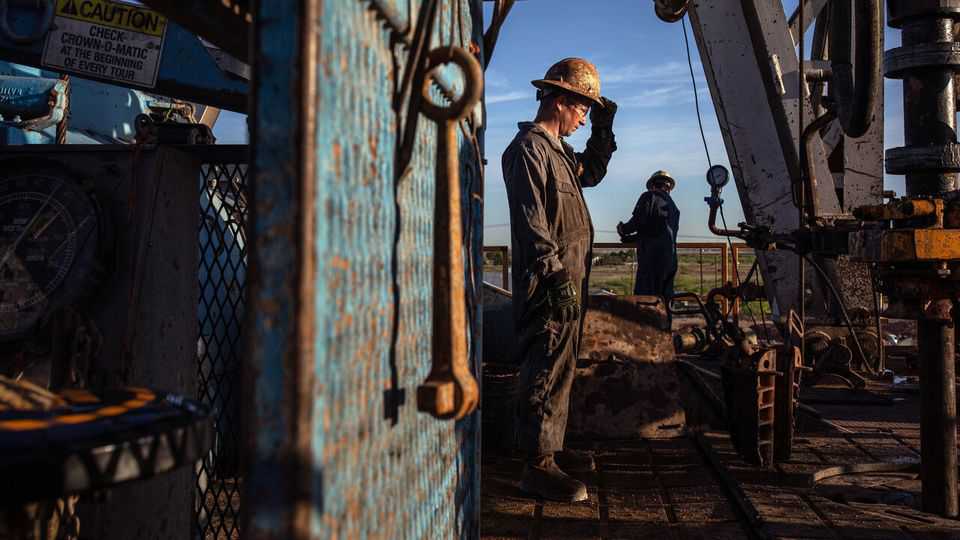
Oil-services firms are the cowboys of the energy industry. Their work—which includes everything from drilling holes and laying pipes to building roads—keeps the world’s hydrocarbons flowing. And it is often carried out in harsh physical conditions in risky places. Baker Hughes, Halliburton and SLB, the industry’s leading trio, are now eagerly eyeing opportunities in Venezuela following the ousting of the country’s strongman, Nicolás Maduro, by Donald Trump. The president’s war with Iran, by contrast, has brought short-term pain to the oil-services industry. In time, it may pay off handsomely.
The Iran war’s impact on oil-services firms was in evidence when they recently reported earnings for the first quarter of the year. Their clients, which include national oil companies and Western majors, have scaled back operations in the region. Offshore rigs in the Gulf lay idle; costs for insurance and logistics are soaring. The Middle East is a big market for both SLB and Baker Hughes, whose revenues from the region fell by 10% and 19% year on year in the first quarter, respectively.
Beyond the immediate disruption, however, lie opportunities. SLB executives talk of a “broad-based recovery” in upstream markets in 2027 and 2028. One factor is post-war reconstruction. Rystad Energy, a consultancy, reckons that damage to oil-and-gas infrastructure in the Middle East could cost $50bn to repair. As that takes place over the next few years, it promises a bonanza for the roughnecks who will perform the dangerous work.
The second factor fuelling a prospective boom is a possible loosening of the oil majors’ purse-strings. For five years worries about decarbonisation and peak oil have led the industry to slash upstream investment, hoarding the cash and shovelling earnings back to shareholders. The appetite both of policymakers and corporate bosses for climate-friendly action was already fading before the war, but the oil shock may at last push the majors into investing again. Wood Mackenzie, a research firm, reckons that the underinvestment in wells globally means that to meet demand big oil must add 300bn barrels to reserves by 2050 (more than the proven reserves of Saudi Aramco, the world’s biggest oil company).
Oil majors are understandably hoping to diversify away from the Gulf. BP, Chevron, ExxonMobil, Shell and TotalEnergies have talked of fresh prospects in Africa, South America and the eastern Mediterranean. In April Halliburton said it had won a huge fracking contract with Argentina’s state-run oil company, YPF. Brazil’s deepwater production is booming. Even shale in America, which had appeared close to peak output, is getting a new lease on life. Halliburton says its fracking fleets there are mostly booked out until the end of the second quarter of this year.
Plenty could still go wrong. A swift peace deal could send oil prices plunging. Investors, burned before by the shale boom and bust, could demand continued capital discipline. A more likely scenario, however, is that the next decade of hydrocarbon spending is defined by oil-importing nations looking for energy security. As James West of Melius, a firm of analysts, puts it: “The race to diversify supply sources and rebuild production capacity will drive upstream spending for years.” Good news, then, for the oil-services cowboys. ■