Is Vietnam’s latest railway ambition worthwhile?
Some say the whopping project should be scaled down
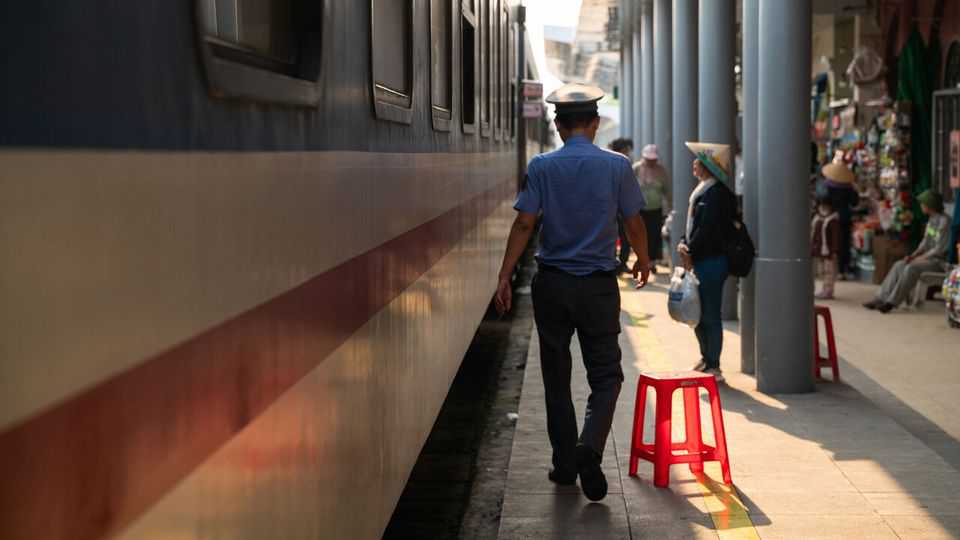
In 2009 Vietnam’s then prime minister made an audacious proposal for a high-speed railway that would connect the country’s south and north, replacing the creaking Transindochinois installed by the French a century earlier. The project, which would have cost more than half of the country’s annual GDP at the time, was approved by Vietnam’s communist politburo and central committee before being blocked by the National Assembly in a rare show of discord.
Seventeen years on, and at the helm of a much stronger economy, Vietnam’s leaders have revived dreams of a 1,540km railway that would cut the journey from Ho Chi Minh City to Hanoi, the capital, to six hours, down from the current 35. With an updated price tag of $70bn, a still hefty 14% or so of the current GDP, it would be the largest infrastructure project in Vietnam’s history and among the costliest rail schemes in the world. Construction will begin before year-end, authorities say. Except they have yet to answer one thorny question: where’s the money?
As an investment, high-speed rail has a bad reputation. Examples abound from California to Britain of projects that have become dogged by cost overruns, delays and scandal. To pull them off, many in the region have leaned on China, which hosts the world’s longest and, by metrics including ridership, speed of construction and cost, most successful high-speed rail system. With nearly all of their own big cities already connected, Chinese engineers are also looking outward for new projects. The government in Hanoi, however, has its own reasons for steering clear.
Having been occupied by China for a thousand years, Vietnam is wary of handing China influence over such a chunky piece of infrastructure. And officials have no doubt paid attention to events in Indonesia, where a Chinese-backed high-speed railway between the cities of Jakarta and Bandung has not proved popular since opening in 2023. Indonesia faces strain in repaying its $5bn loan to China, on which annual interest exceeds $70m.
Vietnam will seek to rely on itself, its leaders say. They want private investment, which they hope will minimise graft and inefficiency. But the sheer size of the project is daunting. Last year a Vietnamese conglomerate, Vingroup, offered to bear 20% of the cost if the government would come up with an interest-free loan for the remainder. But in December Vingroup abruptly withdrew its bid, saying it would focus on other projects. No other eligible bidder has emerged.
Privately, business leaders are sceptical that the government can raise the funds. The promise of high-speed rail is enticing: Vietnam needs to ramp up its spending to meet ambitious growth targets and a project of this size would help, as well as spreading out development.
But drawing lessons from Japan’s Shinkansen bullet trains, it may be wiser to scale down and start with building what would probably be the rail network’s most profitable leg, the southern one between Ho Chi Minh City and the coastal city of Nha Trang, even if that is less flashy. Will the communist bosses like that? ■