If Labour loses Wales on May 7th, it will snap a world record
But 104 years ain’t bad
You can walk many streets in the Ebbw Fach valley in south Wales—and, because of the steepness of the hills, take many breaths—before spotting a political poster. The Welsh parliament, known as the Senedd, holds elections on May 7th. It is a powerful body, responsible for education and health and able to vary income-tax rates. Yet the election seems to have generated little excitement. You would certainly not sense that an event of global significance is about to occur.
Political scientists at Cardiff University reckon that the Labour Party has dominated Wales longer than any party has dominated any democracy. Labour has won a plurality of Welsh seats in every general election since 1922, and has won every Senedd election since that body was created in 1999. For historical consistency, the party beats the Christian Social Union in Bavaria, the South Tyrolean People’s Party in Italy and the Democrats in the American “solid South” (who cheated by disenfranchising black people).
If the polls are right, Labour’s run will end next week. Plaid Cymru, a nationalist party, is expected to win the Senedd elections; Reform uk, a right-wing populist party, might come second. That would shake Labour and Britain’s prime minister, Sir Keir Starmer. Although fewer than one in 20 Britons live in Wales, it is central to the party’s identity. Labour’s first leader, Keir Hardie, represented a Welsh seat. So did the party’s first prime minister, Ramsay MacDonald. If you could cut the Labour Party, it would bleed Welsh red.
The end of Labour’s hegemony would also change Wales. Public policy might not alter much: a Senedd led by Plaid Cymru would probably enact a left-wing agenda broadly similar to the one pursued by Welsh Labour (which sits to the left of the national Labour Party). But culture would shift. A Wales that is not run by Labour is not quite the same Wales.
Labour has consistently dominated the Valleys even as its fortunes have fluctuated elsewhere. And few places have been more solid than the area around Abertillery, in the Ebbw Fach valley. In 12 out of 20 elections to the Westminster Parliament between 1918 and 1979, Labour’s candidate in Abertillery won at least three-quarters of the vote. In six other elections there was no contest, because nobody dared to stand against Labour.
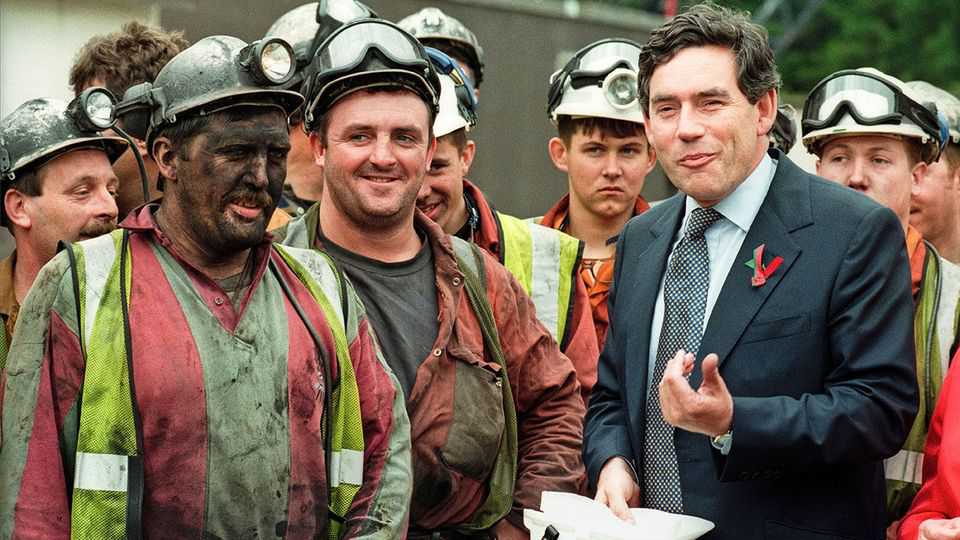
The party’s hold there was built on a firm foundation of coal. The rock populated the valley, as miners flooded in from the rest of Britain and Ireland in the 19th and early 20th century. The dangerous job of digging the stuff out created a close community and powerful, often militant trade unions. “We talked about politics in the pit, and we talked about mining in the pub,” says Steve Davies, who worked as a miner and a security guard.
George Thomas, who became a Labour mp, remembered looking on his local representative as akin to a high-court judge or a god. When the Abertillery mp George Daggar died in 1950, local newspapers printed eulogies. “The magnificence of his character was equalled by the magnificence of his principles,” claimed the South Wales Gazette. The churchman who spoke at Daggar’s funeral succeeded him, winning 87% of the vote. Abertillery now has a George Daggar Avenue.
The politicians who held such safe seats were not always attentive to their constituents. Neil Kinnock, who was first elected to represent a seat next to Abertillery in 1970 and later became leader of the Labour Party, remembers that his predecessor did not even hold regular office hours. Constituents would try to catch their mp in a café, where he was known to repair after shopping with his wife.
“This was the home of the Labour Party,” says Lyn Maloney, who runs a heritage group out of the impressive Miners Institute in Llanhilleth, south of Abertillery. “The mp didn’t have to come and say: ‘Vote for me.’ People just did.” The bond between party and people endured after Labour started drawing mps from the professions rather than the miners’ unions. It even survived the closure of the mines.
It seems unlikely to survive an era of political fragmentation and turmoil. Labour is now the incumbent in both the Senedd and Westminster. It is catching the full force of popular discontent with public services and the economy. Plaid Cymru, which shrewd Labourites identified as their most dangerous adversary as early as the 1970s, has cleverly positioned itself on the left. Reform uk is potent too. Unlike the Conservative Party, it is not burdened with a century’s worth of opprobrium.
Just outside Abertillery, a group of middle-aged and old residents convened by a community-regeneration project known as Pentref Tyleri describe how the place has changed. They cheer the growing beauty of the valley, which is no longer blackened by mining. But they lament the decline of many aspects of communal life. People drive to supermarkets rather than visit local shops; the Nonconformist chapels are empty; the annual carnivals are diminished; unfamiliar people have moved in.
Monotonous Labour voting is yet another aspect of communal culture that is fading. The change is not bad, any more than supermarkets and secularism are bad. It simply makes a place like the Ebbw Fach valley less special. And it cuts a link to the past. The local residents believe that their parents’ generation would be horrified if they could see how their descendants will vote. The phrase “turn in their graves” comes up a lot.■