How Kevin Warsh could save the Federal Reserve
There is much to like about the next Fed chairman—if his backbone holds
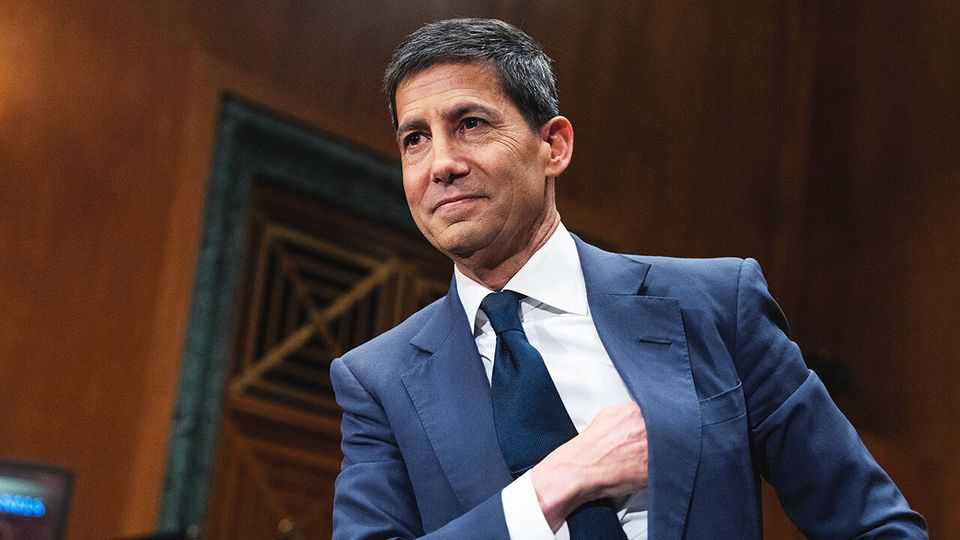
IT IS NO secret that Kevin Warsh has long coveted the chairmanship of the Federal Reserve. He has at last achieved his goal. The Department of Justice said on April 24th that it would drop its criminal investigation into Jerome Powell, the current chairman, a step a swing-vote senator had demanded before advancing Mr Warsh’s nomination. The new man is now all but certain to be confirmed. The press conference Mr Powell gave on April 29th should be his last in the role.
Mr Warsh was not The Economist’s preferred choice to become the world’s most important central banker. In chasing the job he changed from a long-time inflation hawk into a rate-cutting dove. He is not as wonkish as Chris Waller, another erstwhile candidate, has little training in economics and has for over a decade made over-egged and analytically hazy criticisms of the central bank, building a manifesto for the chairmanship that lacks rigour. Sometimes, too, he has behaved cynically. In his confirmation hearing on April 21st he conspicuously refused to rebut the lie that the presidential election in 2020 was stolen from Donald Trump.
Yet none of that will determine where Mr Warsh ranks in the pantheon of America’s central bankers. The real test is how he deals with Mr Trump. The president’s demands for lower interest rates—despite five years of above-target inflation—mean that the Fed is facing its greatest crisis in 50 years. Mr Warsh once gave a speech entitled “An Ode to Independence” and at his hearing emphasised the importance of the bank’s credibility. If in office he withstands the president and steers the bank to safer waters, he could count as one of the greats.
The first test of his mettle will come almost immediately. The spike in oil prices and the resilience of the labour market have undermined the case for lower rates that it was possible to make at the start of the year. Mr Warsh would have a hard time persuading other rate-setters to loosen monetary policy and, despite their traditional deference to the chair, he has only one vote out of 12. He might use his colleagues as cover when explaining to Mr Trump why rates have not fallen, but will have to deftly avoid inviting further attempts to boot them out of office. Mr Warsh has wisely distanced himself from a MAGA plan to purge the presidents of the regional Fed banks, five of whom vote on monetary policy at any one time.
Mr Warsh will need allies at the Fed if he is to pursue his reform agenda. He wants the central bank to shrink its balance-sheet, to talk less in public about the future path of interest rates and to look at a wider range of data. He calls that “regime change” but his ideas are hardly radical. The Bank of England, for example, is midway through a balance-sheet rethink. Among central bankers, who can sort Mr Warsh’s political statements from his policy preferences, the incoming Fed chairman is not seen as a revolutionary. He could hold off Mr Trump on rates while implementing these reasonable reforms.
It is easier to imagine Mr Warsh achieving this if he is surrounded by technocratic colleagues. Much rides on a Supreme Court case over Mr Trump’s attempt to sack Lisa Cook, a Fed governor, for alleged improprieties in old mortgage documents. On April 29th Mr Powell, whose term as a governor does not expire until 2028, said that he would remain on the board. That is a break with tradition—useful cover that Mr Warsh should welcome.
The irony is that the moment looks made for the Kevin Warsh who existed before he had to persuade Mr Trump to appoint him. He would be an inflation hawk in an inflationary era, and a true believer in central-bank independence during an attack by the executive, as well as a sceptic of big balance-sheets after an era of free money. We hope that is the Kevin Warsh who turns up for work at the Fed in May. ■