China is seeking self-sufficiency in police dogs
State media are singing the praises of home-grown canines
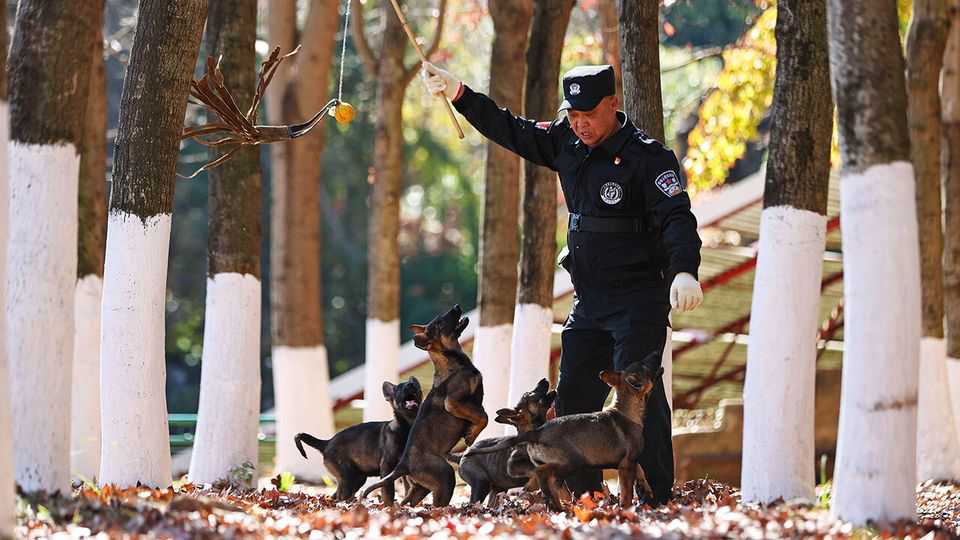
China has long tried to reduce its reliance on foreign imports of everything from soyabeans to jet engines. Its security-minded officials believe that developing home-grown alternatives is safer. Now a number of state-run media have been celebrating a more unusual kind of self-sufficiency. The country is embracing an advanced new Chinese breed of police dog.
Most of the dog breeds used by police forces around the world can be traced back to northern Europe. But in the 1950s officials in Kunming, a city in south-west China, started trying to breed their own alternative, using German Shepherds and local wolf-dog hybrids. These days nearly 1,000 “Kunming” pups, as the breed was named, are born there every year, after decades of experimenting with different traits.
China’s public-security ministry says the dogs are an important “independently controlled” advantage for China amid “fierce global competition” in police-dog breeding. Since December it has been requiring police forces across the country to replace their foreign dogs with more home-grown Kunmings.
One reason is that the Kunming is, at least according to China’s police, a very good dog. It is clever, fierce and can cope with high altitudes, heat and cold. It also has a sharper nose than other police dogs, according to experiments by its breeders. And the dogs’ handlers have claimed that the Kunmings have an “eastern” temperament (which they define as reserved, yet intimidating when needed). In 2011 officials set up a gene bank to protect the breed’s dna. In 2018 China successfully cloned its first Kunming to ensure a particularly fine dog’s traits could live on.
In fact, the real motive of the campaign is probably an attempt to stoke national pride. Dramatic videos published by state-run media show the Kunmings jumping through hoops of fire, tracking suspects through forests, and sniffing out drugs and explosives. The dogs are also shown patrolling in patriotic places such as Tiananmen Square in Beijing and the Great Wall of China, as well as far-flung restive regions such as Tibet and Xinjiang.
They have also been given as gifts to police forces in neighbouring countries, such as North Korea and Pakistan. Officials claim such efforts help boost China’s brand overseas. In times gone by, the best-known Chinese canines were toy dogs such as the Shih Tzu and Pekinese; it may be that Chinese rulers these days have come to prefer the more intimidating vibe of the Kunming. ■