Business
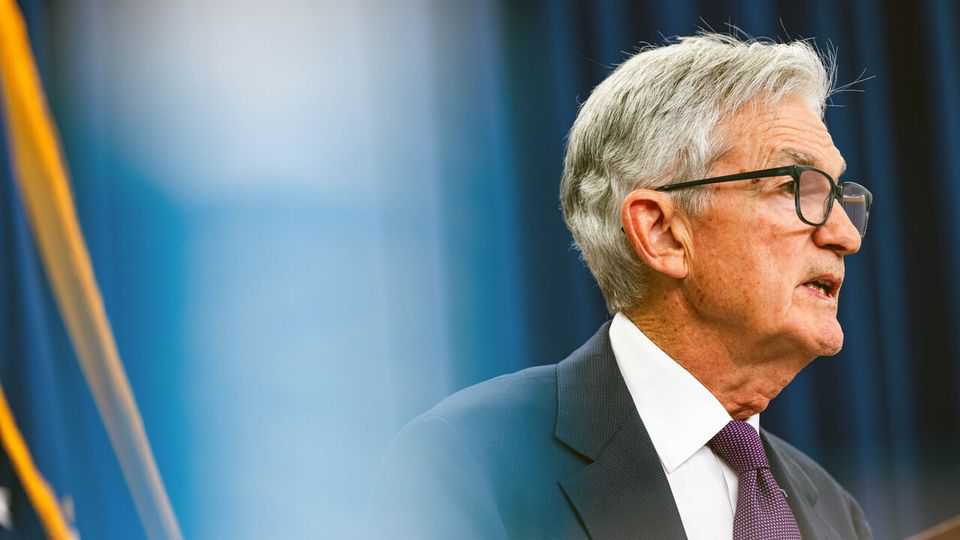
The Federal Reserve kept interest rates on hold, pointing to the possibility of higher inflation from surging energy costs. It was Jerome Powell’s last meeting as chairman; the Senate Banking Committee approved the appointment of Kevin Warsh as his replacement shortly before the end of the Fed’s meeting. Mr Powell will remain at the central bank as a governor. In his final press conference he warned of the threat from Donald Trump’s “legal assaults” to the independence of the Fed. The Justice Department has announced that it is dropping its investigation into Mr Powell, though one official has suggested the case could be reopened.
The American economy grew by 2% in the first quarter at an annualised rate. That was slightly below market expectations, but better than the 0.5% increase in GDP recorded in the fourth quarter of 2025.
The Bank of Japan also met and made no change to interest rates, though three of the board’s nine members voted for an increase. Ueda Kazuo, the governor, said the bank was still pondering the implications for inflation from the Middle East conflict. Markets think it will lift rates in June.
The European Central Bank and Bank of England followed suit and left their benchmark rates unchanged. The euro zone’s annual inflation rate jumped sharply in April to 3%. The British bank noted that consumer-price inflation in the United Kingdom had increased to 3.3%, would probably be higher later in the year as the effects of higher energy prices pass through, and that there was a “risk of material second-round effects in price and wage-setting”.
Alphabet’s revenue from Google Cloud rose by 63% in the latest quarter, year on year. Investors were also delighted by earnings reports from Amazon and Microsoft. But Meta’s results struck a sour note when it signalled a much larger rise in spending on AI than markets had expected. Meta is planning to slash 10% of its workforce in order to run the company “more efficiently” with AI.
China took Meta by surprise by ordering the company to unwind its takeover of Manus, a developer of AI agents. Manus was founded in China and has moved its base to Singapore, but China says it will not allow foreign investment in the firm. Meta is already busily integrating Manus software into its platforms.
Kone agreed to buy TK Elevator for €29.4bn ($34.4bn) in a deal that will create the world’s largest maker of lifts, if it passes antitrust scrutiny. The combination of the Finnish and German companies is one of Europe’s biggest takeovers in years.
Oil prices climbed again as markets worried that the Strait of Hormuz might not reopen soon. Brent crude reached $125 a barrel before paring back. Meanwhile, big oil companies began reporting their earnings from the first quarter, which includes the start of the war. BP’s headline profit of $3.2bn was its best in a quarter for three years. Meg O’Neill, BP’s new boss, warned governments not to impose new windfall taxes on oil profits, which would deter future investment. TotalEnergies’ net profit rose by 29%, year on year, to $5.4bn.
Investors cheered Intel’s latest earnings. Although the chipmaker reported a quarterly loss because of spending on restructuring, revenue from its data-centre business was up by 22%, year on year, and the company’s forecast for the current quarter beat expectations. Intel’s stock surged; it is up by 140% since the start of the year. That sparked a rally in the shares of other chipmakers. Samsung’s operating profit for the quarter was more than it made in all of 2025.
Rising stocks of Asian chipmakers helped propel the MSCI Emerging Market index, which is made up of the shares of large companies in 24 developing economies, to a record high. The index has bounced back from a sharp fall at the start of the Iran war. Three chipmakers—Samsung, SK Hynix and TSMC—account for nearly half its gains.
Elon Musk appeared in court to argue his case that OpenAI has broken a commitment to remain a charity by setting up a for-profit arm. Mr Musk helped found OpenAI and says it is “not OK to steal a charity”. OpenAI claims no records exist of promises made about its future and that Mr Musk now competes with his own AI service, xAI. If Mr Musk wins the trial OpenAI may have to undo its restructuring.
The Pentagon has turned to Google’s Gemini AI for help in classified work. The contract says the Pentagon will use Gemini for “any lawful government purpose”, and includes a clause suggesting it won’t be used for mass surveillance or autonomous weapons without human control. Around 600 employees at Google signed a letter asking the company not to allow the technology to be used on classified workloads. The management responded by saying it was proud to work with the armed forces.
Japan Airlines announced that it will use humanoid robots for baggage-handling at Tokyo’s Haneda airport. Due to an ageing workforce, the company said there were not enough human baggage-handlers. The robots will perform some strenuous tasks, it said, but humans will still be around to oversee safety. Other airports are also experimenting with new technologies. Gatwick has been trying out autonomous wheelchairs to cart infirm passengers around.