The Republican congressman taking on Trump
Thomas Massie has launched a one-man rebellion from Kentucky
 April 23rd 2026
Thomas Massie is “weak and pathetic”, a “lowlife”, a “loser”, a “moron”; a “RINO” (Republican in name only) who has been captured by his “radical left flamethrower” wife. You don’t have to read between the lines of Donald Trump’sTruth Socialposts to know he takes a dim view of the Kentucky congressman, one of a handful of Republican politicians willing to defy him. On a rainy day in March, Trump travelled to Massie’s district to tell voters to reject their congressman in a primary. In front of thousands in a packed warehouse, the president denounced Massie as a “complete and total disaster as a congressman and, frankly, as a human being”. “Shameful!” someone shouted. Trump raised his voice: Massie was “disloyal to the Republican Party, the people of Kentucky and, most importantly…the United States of America.”
Massie has crossed Trump on numerous occasions, especially in the past year. He voted against the shutdown deal in November, and against theOne Big Beautiful Bill Act, Trump’s tax-and-spending plan—one of just two Republicans to do so in each instance. He has tried to revoke Trump’s tariffs on Canada and to block America from attacking Venezuela and Iran without congressional approval.
Massie sees the war with Iran as unconstitutional and an attempt to distract from the fallout from theJeffrey Epsteinscandal (“Bombing a country on the other side of the globe won’t make the Epstein files go away”, he posted on X in March). His greatest political triumph came last autumn, when he co-authored legislation compelling the Justice Department to release files related to the paedophile financier. Until then, Trump’s grip over the Republican Party had seemed absolute. The Epstein Files Transparency Act, which was backed by every Republican bar one, was a colossal act of defiance from a party defined, until that point, by its submissiveness.
The vast majority of Republican politicians have deferred to Trump, including those who crossed the president during his first term; former senators J.D. Vance and Marco Rubio were both anti-tariff before becoming essential members of the administration. Others, such as congresswoman Marjorie Taylor Greene, have taken early retirement from politics. Massie’s refusal to play ball has won him a national following and powerful supporters. “He won’t be controlled,” Tucker Carlson told a podcaster last December. “And if he doesn’t think something, he’s not going to say it, period. He may be wrong but he’s sincere.”
Last summer Trump tasked two advisers with finding a candidate to oppose Massie in the primary, which will be held on May 19th ahead of this autumn’s midterms. At the rally Trump described Ed Gallrein, the Kentucky farmer and retired Navy SEAL chosen to take on Massie, as “a tremendous war hero”. “This guy is unbelievable,” Trump said, patting him on the back as the crowd cheered. “He is central casting.” (This is the president’s highest form of compliment.)
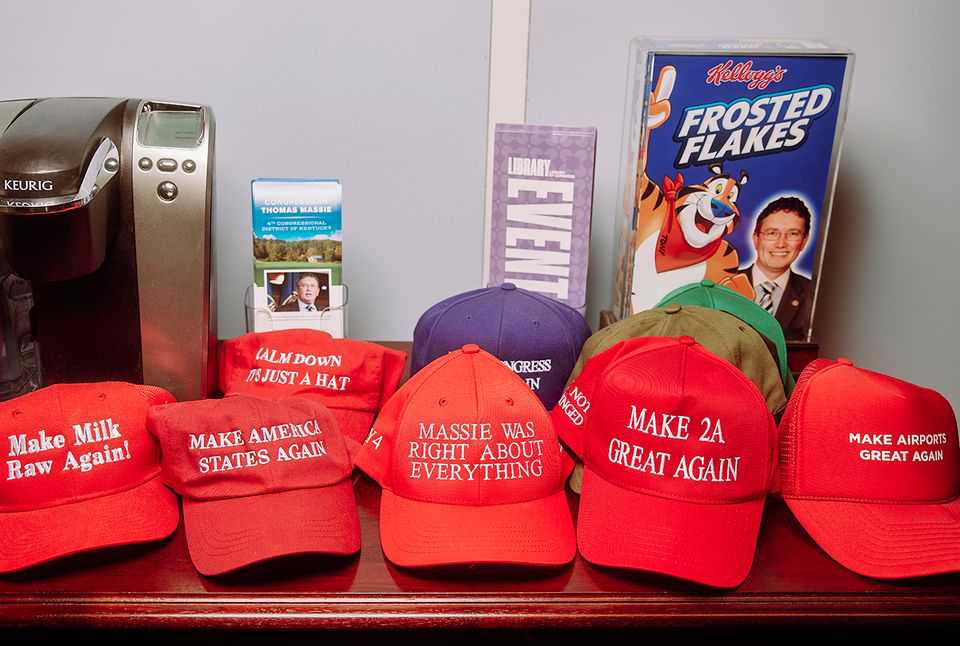
Yet Massie, 55, also has star power. A small-town boy from Kentucky, he left the state to build a successful technology company before returning to live off the land (he attributes his recent glow-up, which led one colleague to dub him “the sexiest man in Congress”, to a diet of raw milk, red meat and fresh vegetables). Massie, a libertarian-leaning conservative, is in favour of cutting red tape for farmers and dismantling both the education department and the Environmental Protection Agency. He is an isolationist who wants to pull America out of NATO. He is firmly anti-gun control: he once posted a Christmas photo of himself and his family posing cheerily with military-style rifles, just days after a school shooting.
Gallrein, widely seen as a proxy for Trump, has a tough job on his hands. Massie is popular in his district: since being elected to Congress in 2012, he has won every primary in which he has been challenged by more than 75%. Many constituents see him as a “folk hero” for his unyielding libertarianism, said Al Cross, a journalist and veteran observer of Kentucky politics. But Trump is also popular in the district, and several local Republican officials I spoke to said that voters had tired of Massie’s feud with the president.
Last month the Wall Street Journal reported that each side had spent more than $3m on advertising. Donors to Massie’s campaign include Jeff Yass, a libertarian businessman, while Gallrein’s is backed by hedge-fund managers Paul Singer and John Paulson, and the casino magnate Miriam Adelson. Most small donations to both campaigns have come from outside Kentucky, showing how important the Trump v Massie contest is on the national stage. “[Massie is] facing the biggest challenge of his life,” according to Cross.
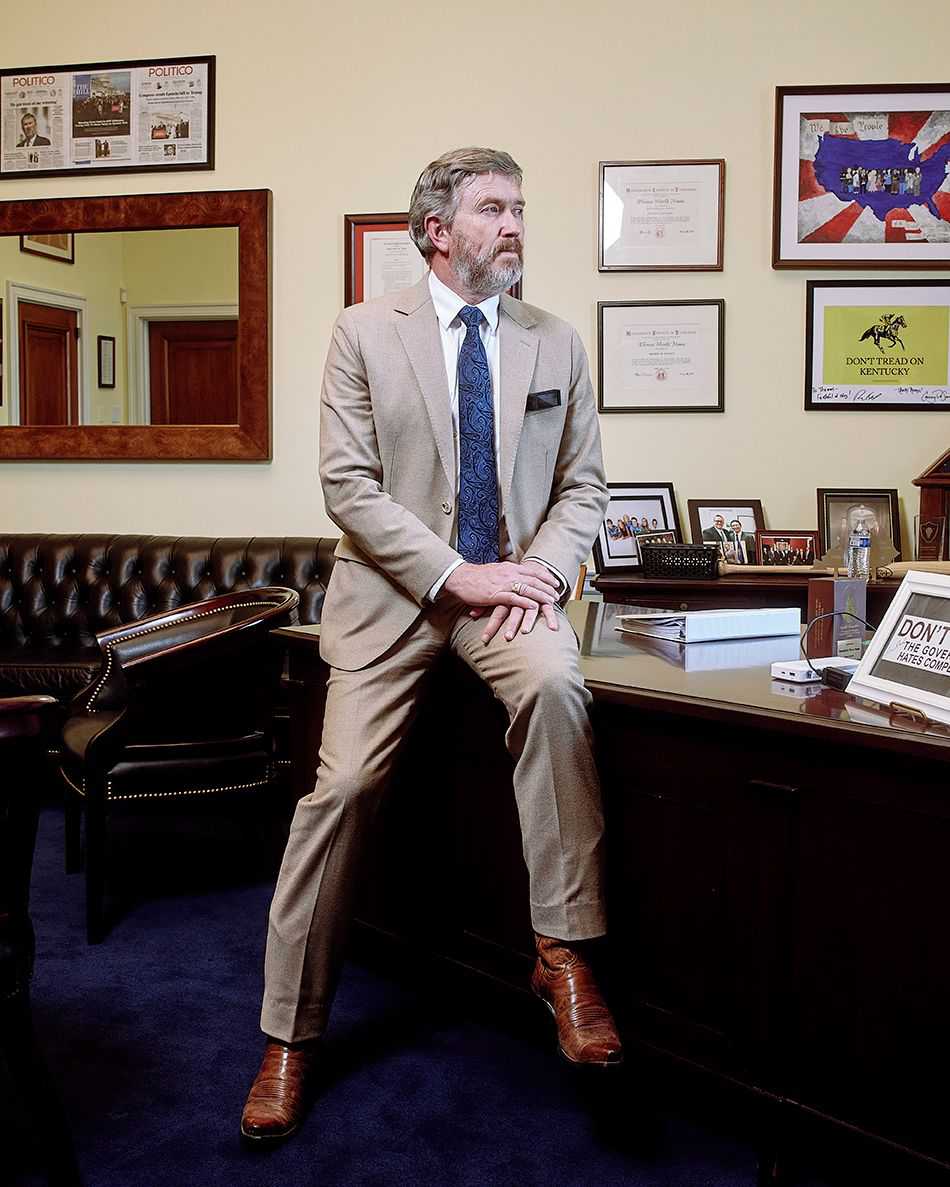

Massie’s stand has come at a personal cost. He and his wife have been vilified online and he has received death threats. He may well lose his job. It needn’t have been this way: Massie could have glossed over his disputes with Trump; he could have shut up about the Epstein files after the bill went through. Instead he has continued to attack Trump’s cabinet secretaries for their links to Epstein, and at rallies makes a virtue of his beef with the president. “He’s not pulling any punches,” said Ro Khanna, a Democratic congressman who wrote the Epstein act with Massie. “If he says he’s going to do something, he follows through.”
Can a Republican defy Trump and live to tell the tale? Massie has decided to find out—staking his political career on a gamble none of his peers has been brave enough to make.
In March, a few weeks before Trump’s rally, Massie gave me a tour of his “holler”, the narrow valley in the Appalachian foothills where he has lived since the early 2000s. A forest of snow-covered trees gave way to a clearing, where two rows of pecan trees stood in front of a barn housing shaggy black cattle. An excitable dog named Possum charged around, neglecting the ducks he was supposed to be protecting from coyotes. On a hill overlooking the farm stood a four-storey timber-frame house with a turret.
“I built it from scratch,” said Massie. His first wife Rhonda had grown up on the 1,500-acre parcel of land, and when they moved there with their children they decided to build their own place. Massie quarried sandstone from the land and harvested oak and hickory from the forest. Before he embarked on the project he had never built anything bigger than a treehouse (and even then he hadn’t finished it). Nonetheless, “I convinced myself that if farmers a hundred years ago could [build a timber-frame house] without a calculator, I could do it with a computer.”
Massie is resolutely off-grid. He pointed to the turret, the roof of which was covered with solar panels. They power the house, in tandem with a battery that he salvaged from a bust-up Tesla. He gets his water from a nearby pond and a well that he dug. “The electric wire that connects you to the electrical grid is like an umbilical, like in [the film] ‘The Matrix’,” Massie has said. “Government has a lot of control over your life with that one little wire.”
He is proud to hail from an outlier state, pointing out that although Kentucky is below the Mason-Dixon line, it declared itself neutral at the start of the civil war. He describes Lewis County, where he grew up and lives now, as an anomaly in its own right. The area was a Union stronghold: Massie likes to boast that an ancestor—“my mammaw’s grandfather”—was a Union soldier. Lewis County’s forbidding topography condemned many of its inhabitants to poverty—the hills made it difficult to farm and build roads. But Massie believes it also fostered a culture of self-reliance, giving settlers the freedom to think differently.
A few miles from Massie’s farm is the small town of Vanceburg, where his family has lived for generations. When he was a boy, Vanceburg’s branch of the Dairy Queen was the only fast-food restaurant in the county. Massie once told J.D. Vance, the vice-president, who grew up in Ohio but has written about the summers he spent visiting relatives in north-eastern Kentucky, “[You] appropriated my culture. Those hillbilly cousins—that was me all year.” Vance, apparently, laughed. (He was once a fan, telling the New York Times in 2023, “I absolutely love Massie.”)
Massie was tour-guiding from the passenger seat of my car; in the back was his second wife Carolyn, who used to work for Kentucky senator Rand Paul, a close associate of Massie’s. (The couple married last October; Rhonda died in 2024.) We drove past Massie’s childhood home, a modest two-storey brick house. It was built by his grandfather, a “serial entrepreneur” who appeared to be the embodiment of Lewis County resourcefulness. A beer distributor and truck salesman, he also built the local post office and hauled the stone used to build the courthouse from a local quarry.
It was clear from an early age that Massie had inherited his grandfather’s passion for making things. As a child he loved to tinker with anything electronic. His bedroom became a junkyard for all the components he’d scavenged from household appliances—magnets, motors, capacitors. If he needed a part he would dig through the “layers and strata” until he found it.
When he was in seventh grade, after watching “Star Wars”, Massie built a robot arm, which he figured out how to make “just by taking stuff apart and seeing how things worked and looking at my own arm”. Over the next few years he tinkered with the design until it was ready to enter into competitions. Massie was delighted when something he’d built “from junk” won him prizes and “round-trip tickets” to science fairs in California and Texas. “That’s kind of when I decided that engineering could be lucrative,” he said.


He excelled at high school. Diane Johnson, who taught him chemistry, described him as a “genius” without arrogance. When he found errors in her thinking he would gently point them out after class so as not to embarrass her. “He wasn’t trying to show off how bright he was.” He shone on the school’s quiz team: according to one of his teammates, “his quick recall in math was astounding. The moderator could start reading this super-complex math question and…Thomas would buzz in and have the answer before the moderator could even finish.”
In 1989 Massie enrolled at MIT to study engineering. Two years later he was joined by Rhonda, his high-school sweetheart who was also studying the subject. At the time, said Massie, it was “pretty much unheard of” for kids from his school to go to university out of state. Jackie Claxon, his maths teacher, said most of Massie’s peers didn’t have “the drive to go ahead and step out like he did. He’s fearless. He would try anything and do anything if it interested him.”
Moving to New England was an adjustment for someone from one of the poorest counties in Kentucky. Shortly after he arrived, a car honked at him as he crossed the road. “I thought, ‘I have been here less than a day and already run into somebody who knows me.’” In Vanceburg honking was a form of greeting, so he waved at the driver. “It took me a month to quit waving at cars,” he said.
Massie thrived at MIT, which he called “nerd paradise”. He began working as a lab assistant for Kenneth Salisbury, an expert in haptics, technology that simulates the sensation of touch. Salisbury was impressed by Massie’s speedy problem-solving and described him as an “interesting, kind of exciting mind to work with”. When Massie was wondering what to do for his senior thesis, Salisbury suggested he build a device that would enable him to “feel” the things he saw on a computer screen. Six weeks later, Massie came back with a prototype for the Phantom, a stylus connected to a mechanical arm which gave the illusion that the user was touching 3D objects. Tiny motors applied pressure to the user’s hand to mimic the sensation of slicing through clay, for instance, or manipulating a rubber ball. The Phantom is widely regarded as a milestone in the development of computer haptics.
In 1993 Massie and Rhonda got married. That year they also launched a company, SensAble Technologies, to manufacture and sell the Phantom. The device had many applications: toy designers could use it to digitise production, nano-engineers to test new materials. The company quickly grew from a two-person operation to one employing 70 people, and soon boasted clients including Boeing, Walt Disney and the Mayo Clinic. It raised over $32m in venture capital and its revenue grew 25 times between 1994 and 1999, according to Kevin Bullis, a former editor at MIT Technology Review, in an academic paper on the Phantom.
Despite their success, Massie and his wife never felt at home in Massachusetts and soon moved to neighbouring New Hampshire, which they felt had more in common with Kentucky. New Hampshire is famously libertarian: the licence plates are emblazoned with the revolutionary rallying cry, “Live free or die”. The people there are into their “guns and old cars”, Massie said. They “looked a lot more like the rednecks that my wife and I associated ourselves with”.
But Massie couldn’t shake the feeling of being “the nail sticking up”. Bullis recounts that by the early 2000s Massie had fallen out with his colleagues, who objected to his plan for a mass-market version of the Phantom. In 2003 he and Rhonda quit SensAble, sold their shares and moved the family to Kentucky: they wanted to raise their four children the same way they had been raised. Massie has also said that, after spending so long in the virtual world, “getting back to the earth was important” to them. They bought the farm and Massie started work on the house, following his grandfather’s example. But it wasn’t the only way he wanted to leave his mark on Lewis County.
Massie had always been wary of government—a wariness he said ran deep in the culture of Appalachia. His concerns were “hardened” in 1993 when federal agents laid siege to the compound of the Branch Davidian cult in Waco, Texas, resulting in the deaths of around 80 people. When Massie returned to Kentucky he was taken aback by the power that even local government wields. “The water board or the sewer board or the school board has the power to take your property, either through taxation or outright condemnation, and that’s a very powerful thing,” he has said. “So you either need to run for that office or be very concerned about who takes that position.”

When Lewis County proposed a new property tax, Massie drummed up enough opposition to scupper it, and later forced the county to abandon planned zoning laws. “That’s when I realised you can be an activist and you could change government,” he has said. In 2010 he ran to be judge executive of Lewis County, presenting himself as a champion of small government. He dialled up his Kentucky credentials, playing the banjo at shops and barbecue joints. It did the trick—he won (“I guess part of what endeared me to them is that I wasn’t that good [but] they were like ‘Hey, this guy is willing to try’,” Massie has said).
The county was in the red so he set about finding savings. He renegotiated contracts, axed jobs in county government and privatised rubbish collection. Rather than pay a plumber to install a new water heater in the local prison, he and some inmates fitted it themselves. “I was able to cover my entire salary with the waste that I found,” he told me.
At the time the Tea Party was at the pinnacle of its influence. Supporters of this grassroots movement argued that the federal government had exceeded constitutional limits on its power. It was popular in north-eastern Kentucky, where Republicans tend to be better educated and more ideological than voters elsewhere in the state, according to Steve Voss, a political scientist at the University of Kentucky. In 2012 Massie ran for Congress, styling himself a tribune of the Tea Party. He won the primary in a seven-way race with 45% of the vote.
On Capitol Hill Massie joined forces with Rand Paul, son of Tea Party eminence grise Ron. Rand had been elected as a senator for Kentucky in 2010. The pair formed a “fuck you caucus”, said Cross, the Kentucky journalist: “They wanted to tell people to ‘Get the hell off my land and out of my life and leave me the hell alone.’” Massie developed a reputation for holding his ground, voting against legislation so often he acquired the nickname Mr No. Sometimes Massie’s views aligned with the Republican mainstream: he is anti-abortion, pro-gun and campaigned to repeal the Affordable Care Act. But he remained firmly committed to his libertarian principles. He introduced legislation to reduce some federal prison sentences and tried to repeal the Patriot Act, which expanded government surveillance after 9/11 and was overwhelmingly supported by Republicans.
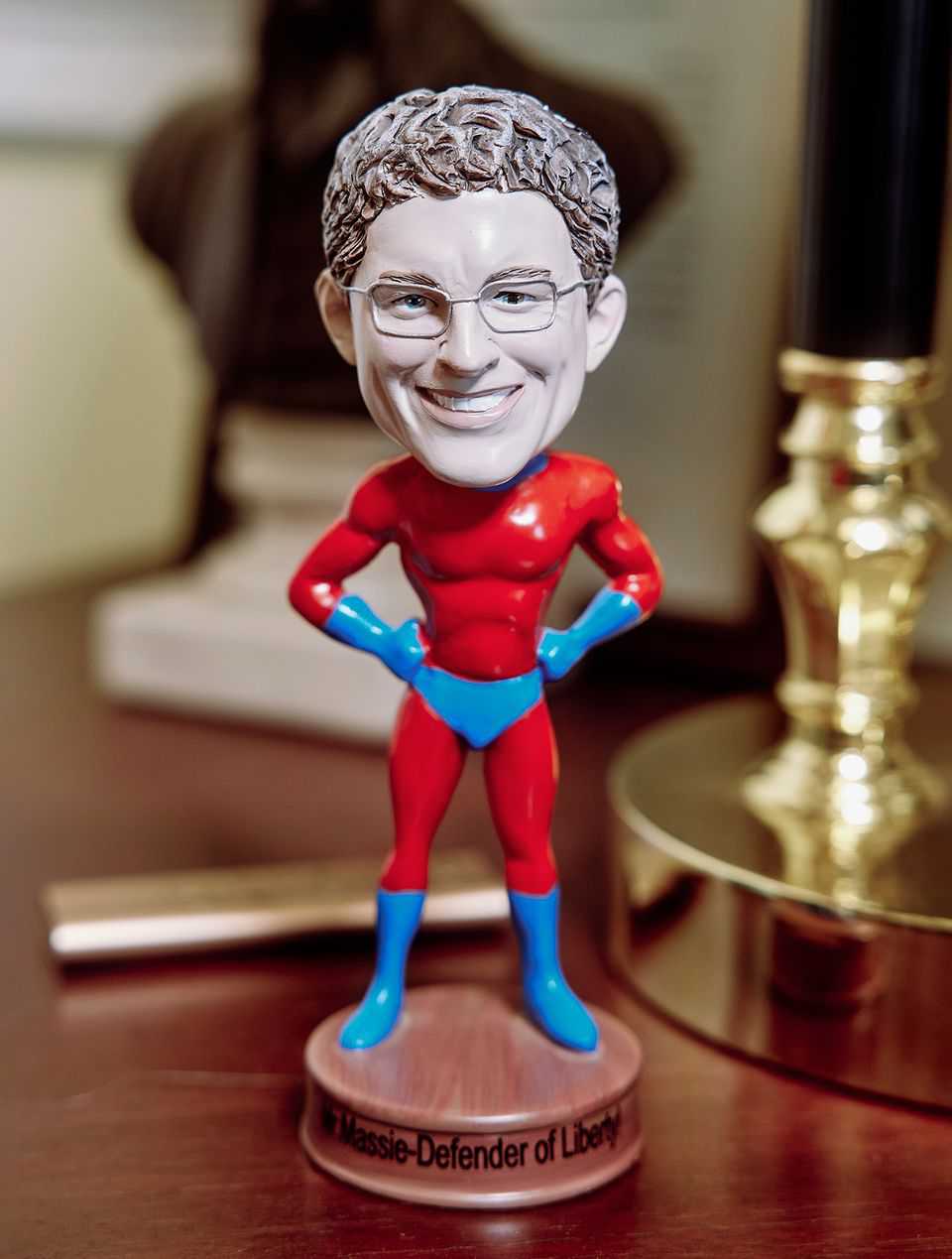
Massie has been prepared to alienate his colleagues. In spring 2020 the House of Representatives was poised to pass a $2.2trn covid-relief bill through unanimous consent. This procedure, which is designed to speed up the passing of uncontroversial legislation, means laws can be passed without a recorded vote, so long as no member present objects. The idea was that representatives hunkering down in their districts wouldn’t have to travel to Washington and risk getting covid. But Massie, who didn’t want to add to the national debt or stoke inflation, objected to the bill. This forced his colleagues to cast their vote in person, leading CNN to brand him “the most hated person in Washington, DC” (an epithet Massie recalled with pride at a recent rally).
Massie feared that by opposing the bill he was “committing political suicide”—he was up for re-election in a few months’ time and 70% of Americans supported the bill. But it was more important to him that the vote of every representative be recorded for posterity (ultimately the bill was passed by a huge majority). In spite of his unpopular position on covid relief, Massie won the primary by 81 points. Voters admired his courage, said Cross, adding that the state had originally been settled by migrants from Scotland and Ireland, whose forefathers had spent centuries battling the English. Massie was seen to share their “pugnacious, independent, self-reliant streak”, Cross said.
Massie wasn’t afraid to unleash his inner Braveheart. When former senator John Kerry was testifying about the risks of climate change at a committee hearing in 2019, Massie mocked him for having studied political science, remarking that it was “appropriate that someone with a pseudoscience degree is here pushing pseudoscience”. Massie’s comments were pilloried in the press but didn’t harm his popularity in Kentucky, which is still a big coal producer. (Not everyone back home was impressed: “Sometimes he makes comments about science things,” said Johnson, his chemistry teacher, citing Massie’s support for raw milk. “And I’m like, Thomas, I taught you better…I’m surprised he’s taken some of those opposing views because…he understands science.”)
Whatever his true beliefs on the science of climate change, Massie cultivated his reputation as a conviction politician. I asked Robin Webb, a Kentucky state senator whose district encompasses Lewis County, why Massie is so popular. “His values are his values, he doesn’t waver,” said Webb, who has known him for years. “Even if you don’t agree with him all of the time, you’ve got to respect that.”
At the start of every congress, representatives are issued with small badges called congressional pins. When Massie first moved to Washington, he noticed that he was treated differently when he wore his. Police officers stepped out of his way; people held the door open for him and stopped talking when he stepped into a lift. There was always a table for him at the capital’s most exclusive restaurants.

This kind of deference made Massie uneasy. To explain why, he drew an analogy with “The Lord of the Rings”, J.R.R. Tolkien’s epic fantasy novel. His farm, he said, is the Shire, the bucolic land where the saga’s heroes, small people with hairy toes known as hobbits, farm, drink and make merry. Washington, DC, is Mordor, the fount of all evil. The congressional pin is the Precious, a magic ring which confers tremendous power on those who wear it, a power so irresistible that bearers of the ring are eventually rendered its slaves.
Massie expands on the metaphor in “Off the Grid with Thomas Massie”, a short documentary film about his life and career, made in 2019. “The hobbits who wear Precious feel powerful,” he says. “And I can feel it myself, and it’s a scary feeling, because I know if I wear this for too long, it’s gonna affect me and not in good ways...Here’s the thing about the hobbits that go to Mordor: most of them succumb to the intoxication of power.” Massie told me he stopped wearing his congressional pin four years ago.
His belief that power corrupts has shaped his approach to politics, he explained. The conventional way to gain political influence is through obtaining office within party leadership. To do so a legislator has to raise money, “give it to the party, and show that you are willing to do things for the lobbyists”, he said. “Maybe they aren’t things you campaigned on, maybe these are things that your constituents don’t even care about.” By and large, lobbyists want the government to spend money on their priorities; they are by definition in favour of big government. To curry favour with them he would have to “betray” his commitment to libertarian principles. In other words, he said, the “inside game keeps you from being virtuous”.
During his 14 years in Congress, Massie has preferred to play what he calls the “outside game”. Describing his strategy, he compared himself to Alexandria Ocasio-Cortez, the media-savvy New York congresswoman. Rather than climb the rungs of power in a traditional sense, she has taken her “message directly to the people” and used her popularity to gain sway in Congress. (“If you use this analogy, make sure people don’t take it the wrong way,” said Massie, seemingly nervous about casting a leftwinger in a positive light.)
Last autumn the outside game finally reaped rewards with the Epstein act, the only one of Massie’s rebellions to have made a real difference. It all began in April 2025 when Pam Bondi, then the attorney-general, invited the House Judiciary Committee, on which Massie sits, to dinner at the Justice Department. Massie later told a reporter from the Atlantic that he had said to Bondi: “I saw you release ‘Phase 1’ of the Epstein files. When do you think we might get ‘Phase 2’?”
According to Massie, Bondi replied that the only material that had yet to be released was what she considered “child pornography—and nobody would want to look at that”. He didn’t pursue the subject “because she made it sound as if you’d be a pervert if you wanted to see the Epstein files”. Massie left the dinner thinking “that unless something changes, we’re never going to see any more Epstein files”. He resolved to bring about that change himself.
Massie has framed his interest in the files as a matter of accountability. It is also rooted in a profound mistrust of federal power and a sense that politicians and elites are colluding to cover up their sinister deeds. During our four encounters, I was struck by Massie’s warmth and gift for storytelling. Yet beneath the surface of the affable engineer, there lurks someone more conspiratorial: a man who appears to suspect that “The Matrix” is not a bad metaphor for reality.
In July the Justice Department announced it would not release any more records. Massie decided to take matters into his own hands. He and Khanna drafted a bill compelling the department to release the files. He knew every Democrat would vote for it, and reckoned he could bring a few Republicans on board too.
When the White House got wind of Massie’s plan, it embarked on a campaign to thwart him. Two of his staffers were offered other jobs, which he suspected was an attempt to slow him down. He had received death threats from people on the left before, but now he started getting them from people on the right. “I’ve never really seriously been worried about my safety until the Epstein files got released,” he told me. “Because now I’ve pissed off a bunch of billionaires who are clearly morally corrupt.”
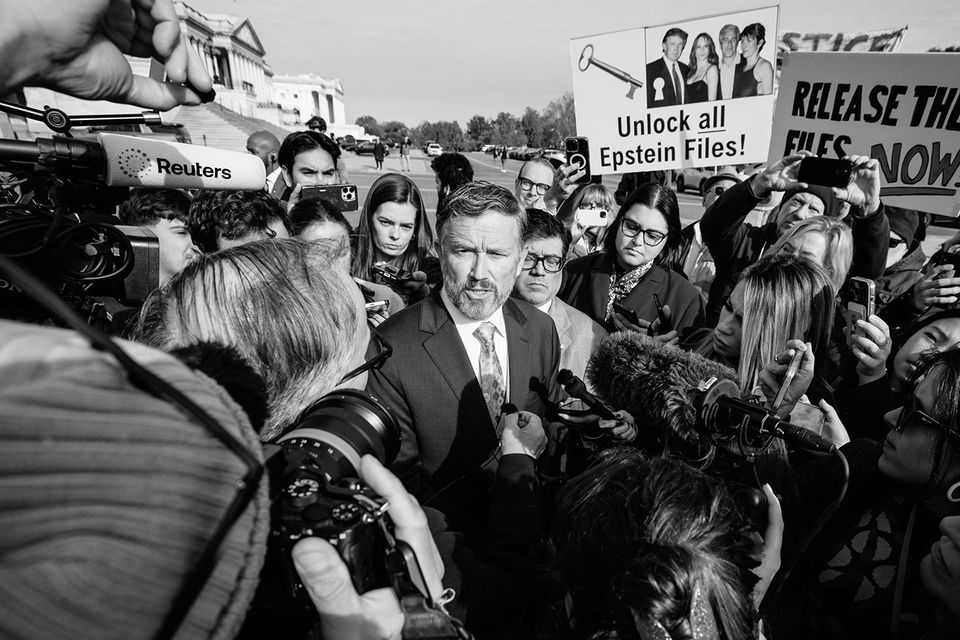
Republican leaders tried to prevent the bill from going to a vote. Massie knew he could force it to the floor if he got 218 representatives to sign a discharge petition. This meant he would need the backing of at least three Republicans. Three Republican congresswomen declared their support—Marjorie Taylor Greene, Nancy Mace and Lauren Boebert. Greene has said that Trump phoned her and warned her to stop, yelling: “My friends will get hurt.” Boebert was summoned to the White House situation room for a meeting with Bondi and Kash Patel, the FBI director. Massie named a group text with the trio “Bravehearts”.
All the while, Massie and Khanna made their case to the public in media interviews. In September they convened a press conference, which featured a speech from Greene and emotional testimony from some of Epstein’s victims. Later that month a poll showed that 67% of Republican voters supported the release of the files. A Republican strategist was quoted as saying that pressure from “furious” MAGA voters was “forcing even the most loyal Trump allies to break ranks”.
By November Massie had the signatures he needed. Trump dropped his opposition and the legislation was passed with an overwhelming majority in the House of Representatives. “Even if you don’t control what bill comes to the floor, you can move the narrative by playing the outside game,” Massie told me. “We won the argument in the American conscience and then that translated into action in Congress.”
On a blustery day in northern Kentucky, two bluegrass musicians strummed their instruments as some 150 Massie supporters gathered for his campaign launch. Pete Hendrickson had travelled from Michigan to see the congressman, whom he described as “a man of principle who understands the constitution and abides by it”. For Cathy Beil, a retired postal worker with a neatly curled fringe, “he’s the most honest congressman we have.” Others admired what they saw as his dogged and lonely pursuit of the Epstein files: “Massie is standing up, going against the grain—a true Kentuckian,” said Craig Pennington, who owns a shop selling Western boots.
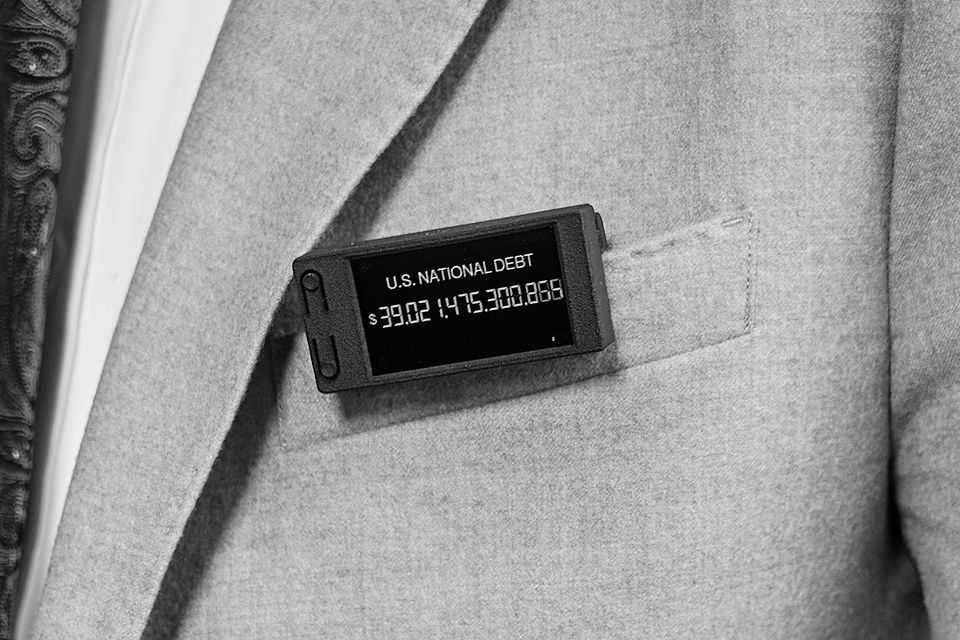
Massie took to the stage in a blue blazer, jeans and cowboy boots. Pinned to his blazer was a digital badge that he designed and made himself: its screen displayed the size of the ever-ballooning federal debt. “I’m sure none of you in here agree with me all the time,” he said, “but it’s about doing what you think is right in the moment all the time.” Referring to critics such as Gallrein who have branded him a Democrat, he said: “I vote with the [Republican] Party 91% of the time but in the 9% of the time, they’re covering up for paedophiles, starting a new war or bankrupting our country. I am not on the bandwagon,” he said, pausing after each word for emphasis. “And I never will be.”
He described how Trump had tried to change his vote on the covid-relief package in 2020. Massie got a call from the president, who vowed to back his primary opponent if Massie voted against the bill. As Massie recounted the anecdote, he tilted his head and puckered his lips, mimicking the president, who apparently told him: “I will come at you…and you’re gonna lose.” The audience cackled. “Well, I survived that [election],” said Massie. He joked that he had “Trump antibodies”, adding, “Hopefully I survive this one.”
If he does lose the primary he would be happy to return to farming full-time, he told me. Most weekends he jumps in his car and drives the eight hours from Washington to Kentucky to tend to his animals. (Not long after Massie married Carolyn, he posted on X that she “helped me butcher meat chickens the day we said our vows”.) The farm, he said, was “the ultimate insurance policy”. It inoculated him against the urge to defend his political career at any cost. “We’re self-sufficient to a high degree,” he said. “We’re not rich but we don’t need a lot of money to keep going. It gives you a sense of security.”
This security, which is plainly psychological as much as financial, lets Massie stand apart. “For many of my colleagues, their sense of importance is wrapped up in the job,” he said. They had calculated that fealty to the president was necessary for their political survival. Massie, however, has more in common with Thomas Jefferson’s ideal of the yeoman farmer. Like many Founding Fathers Jefferson worried that the fledgling republic would succumb to those who sought power for power’s sake. He saw self-sufficient smallholders as the model of virtuous citizenship, as their independence made them harder to corrupt.
It’s not that Massie lacks political ambition. He told me he wouldn’t rule out a run for governor, a role he believes would allow him actually to get stuff done (“In Congress, you have no executive authority so you can’t directly do anything”). But he is not defined by his political job. In “Off the Grid” he said, “My dream is not to be a politician, my dream is not to lord over people from a central government somewhere.” Instead he aspired to raise a family on a farm that he built with his own hands, and be reliant on no one. An aspiring king in Washington would struggle to bend such a man to his will. ■
Charlie McCann is a feature writer for 1843.
Photographs by Jared Soares
Additional images: Getty, Sipa USA, USA TODAY NETWORK