Pomp and pageantry won’t save Britain’s alliance with America
The special relationship? It’s complicated
 April 23rd 2026
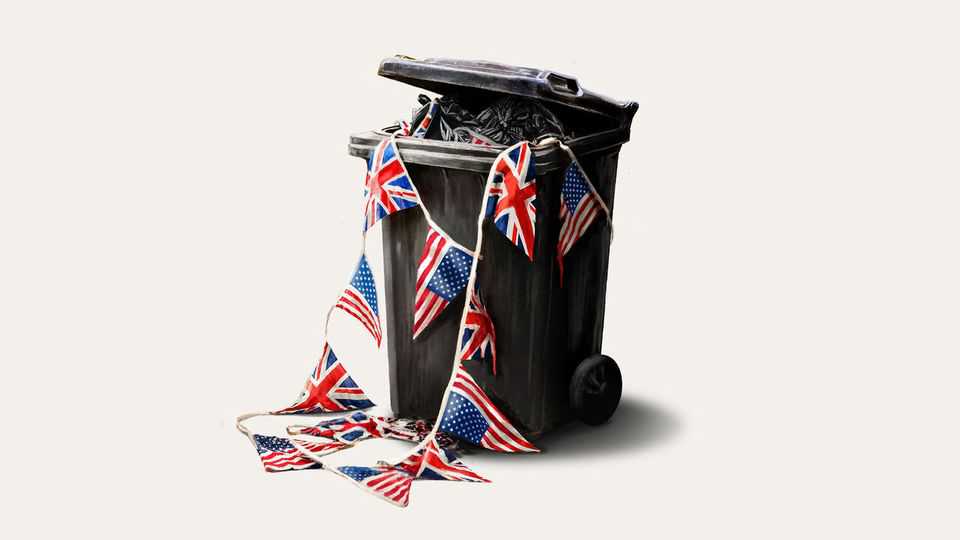
For preference, he talks to plants. But next week King Charles III must stiffen his upper lip and get chummy with Donald Trump. The royal visit to Washington is an attempt by Britain’s government to win back the president’s favour by indulging his love of pomp and bling.
It comes as the special relationship looks worse than at any point since 1956, when America vetoed an Anglo-French attempt to seize the Suez Canal. Today, another war over a Middle Eastern waterway has led to another blazing row. “This is not Winston Churchill we are dealing with,” grumbles Mr Trump of Sir Keir Starmer, Britain’s beleaguered prime minister. Sir Keir has responded with the strongest words in British English: “I’m fed up.”
Mr Trump ismostly to blame. He bullies and insults America’s allies, started a war that hurts them and rages when they don’t immediately back him. Fully 53% of them now believe that America is a negative force in the world, up 19 points since January. Given a choice, they are twice as likely to favour more co-operation with Europe than with America.
Most long-term relationships have ups and downs. When Churchill first spoke of a “special relationship”, America, Britain and other allies had just defeated Nazism and were confronted by the Soviet “iron curtain” (which Churchill christened in the same speech). Over the next 80 years, they linked arms against communism, shared copious intelligence and shed blood together in Korea, Afghanistan and Iraq.
Often Britain has overestimated its importance. As Alex von Tunzelmann, a historian, said of Anthony Eden, the prime minister during Suez, “[He] had believed it might be possible for British brains to run the world with American muscle. He had not expected the Americans to develop ideas of their own.” Always, a hefty share of Britons have been wary of following Uncle Sam’s lead—many were calling Sir Tony Blair America’s “poodle” long before the Iraq war became a fiasco. But no British government has ever imagined that an American president might turn his back on the relationship. Until now.
The relationship may recover when Mr Trump has left office. But Britain should not take this for granted. Post-Brexit, it is adrift politically, geostrategically and economically. Its government is weak. It has lost its role linking Europe to America. And it is relatively poorer. In 2007 its income per person was 20% lower than America’s; now it is over 30% lower.
Aggravating all this is an identity crisis. Britain’s global ambitions are as confused as its messages on whether or not it welcomes migrants. Future, factually grounded American presidents will surely conclude that relations with Brussels or Delhi matter far more than those with dear old Blighty.
Yet Britain has real strengths, and indeed leverage. It is good at attracting global talent; it is located in an enviable spot and has military bases around the world; it has unique prowess in intelligence, special forces, maritime security, defence tech and AI safety; its soft power is huge for such a small country, which helps explain why MAGA types are so obsessed with London’s supposed downfall while not giving a monkey’s about Berlin or Paris.
The first step towards rediscovering Britain’s mojo is to be honest about its shortcomings. As Mr Trump says, Britain needs to spend more on defence. In the past, it has assumed that any wars would be fought alongside the Americans, so gaps in equipment did not matter much. Now that it may have to act alone, or with Europeans, it looks naked.
Britain should accept nuclear dependence on America for now (though hedge for the future) and preserve intelligence co-operation. It should move closer to Europe. And it needs skilful leadership. This week Sir Keir was further weakened by his attempts to explain how he appointed Peter Mandelson, a friend of Jeffrey Epstein, a dead American sex offender, as envoy to the court of Mr Trump. Alas, leadership is something Sir Keir is unlikely to provide.■