Jeff Bezos is raising his game in space
But it will be hard for Amazon and Blue Origin to close the gap with SpaceX
 April 23rd 2026
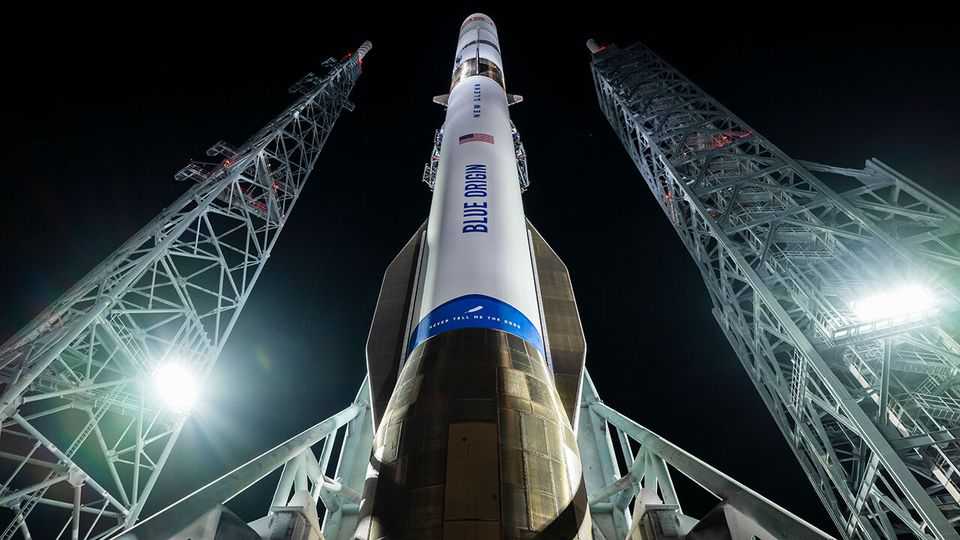
IT LOOKED LIKE a stunning success—until it didn’t. On April 19th Blue Origin, a rocket firm owned by Jeff Bezos, the founder of Amazon, launched its New Glenn rocket into the heavens for the third time. Ten minutes later, the rocket’s first stage came roaring back, landing on an ocean-going barge, ready to go again.
The mission marked the second time that the booster—called “Never Tell me the Odds”—had flown, after it powered New Glenn’s second launch in November. Reusing rockets is vital to bringing down the cost of spaceflight. It is also very hard to do. Blue Origin is the second company to have managed to reuse part of an orbital rocket, after SpaceX, run by Elon Musk, first proved it was possible in 2017.
But having aced the hard bit, Blue Origin stumbled on the easier part. Shortly after launch it said that New Glenn had placed its payload—a communications satellite owned by AST SpaceMobile, an American startup—into the wrong orbit. The satellite was flying “too low to sustain operations”, said AST; shortly afterwards it burned up in the atmosphere. The Federal Aviation Administration, which regulates American rocket launches, is investigating, leaving New Glenn grounded.
Getting it flying again will add another item to Blue Origin’s already lengthy to-do list. For years the firm had a reputation as a laggard. Founded in 2000, it took 25 years to reach orbit. (SpaceX, despite being founded two years later, got there in 2008.) In 2023, in an effort to speed things up, Mr Bezos replaced Bob Smith, Blue Origin’s boss, with Dave Limp, a trusted lieutenant from Amazon.
These days his plate is piled high. Besides developing New Glenn, Blue Origin is working on a space-going tug called Blue Ring and a space station called Orbital Reef. It is also developing Blue Moon, which is designed to ferry commercial payloads to the lunar surface—and, under NASA’sArtemis programme, astronauts, too. In January Blue Origin announced it would create a satellite-internet service aimed at big corporate customers, called TeraWave. The first satellites are supposed to fly next year.
Financial information is scant: Blue Origin is privately held and has been financed mostly from Mr Bezos’s personal fortune. But one big customer is Amazon, where Mr Bezos remains executive chairman and the biggest shareholder. It bought $1.8bn of rocket launches from Blue Origin in its most recent fiscal year. The e-emporium and cloud provider isworkingon a satellite-internet constellation of its own, originally known as “Kuiper” and rebranded to “Leo” in November. It will compete with SpaceX’s Starlink service, providing connectivity in out-of-the-way places.
Amazon is investing heavily in the initiative. On April 14th it bought Globalstar, another satellite operator, for $11.6bn. Globalstar’s satellites already provide connectivity to Apple’s iPhones when they are out of range of terrestrial phone networks. Such “direct-to-device” connectivity is “the hottest area of investment in the satellite business right now,” says Caleb Henry of Quilty Space, a firm of analysts. Crucially, the deal also gives Amazon access to Globalstar’s precious radio spectrum.
But the grounding of New Glenn may slow Leo’s deployment—a problem, given that Amazon is already certain to miss a regulatory deadline in July, by which point it was supposed to have half of its proposed 3,200 satellites in orbit, up from around 250 at present. (It has requested an extension to 2028.) Amazon remains far behind SpaceX, which has more than 10,000 Starlink satellites in orbit and more than 10m customers.
One big difference between the companies, says Mr Henry, is that SpaceX is vertically integrated: besides manufacturing Starlink’s satellites and running the network, it also makes the rockets that launch them. (Indeed, SpaceX has launched many of the Leo satellites that are currently in orbit.) “You could certainly make an argument that Amazon should buy a launch provider,” he says. Perhaps Mr Bezos might know of one for sale?■