Israel’s open-ended wars have eroded its security
 April 23rd 2026
IN THE RUN-UP to Israel’s independence day, the motorway between Jerusalem and Tel Aviv is always festooned with flags. But this year, between the blue-and-white Israeli pennants, hangs another kind of star-spangled banner: America’s. Israel’s government had hoped that Donald Trump would arrive on April 22nd to celebrate the 78th anniversary of its independence. He was to be the first non-Israeli to receive the Israel prize, a state honour.
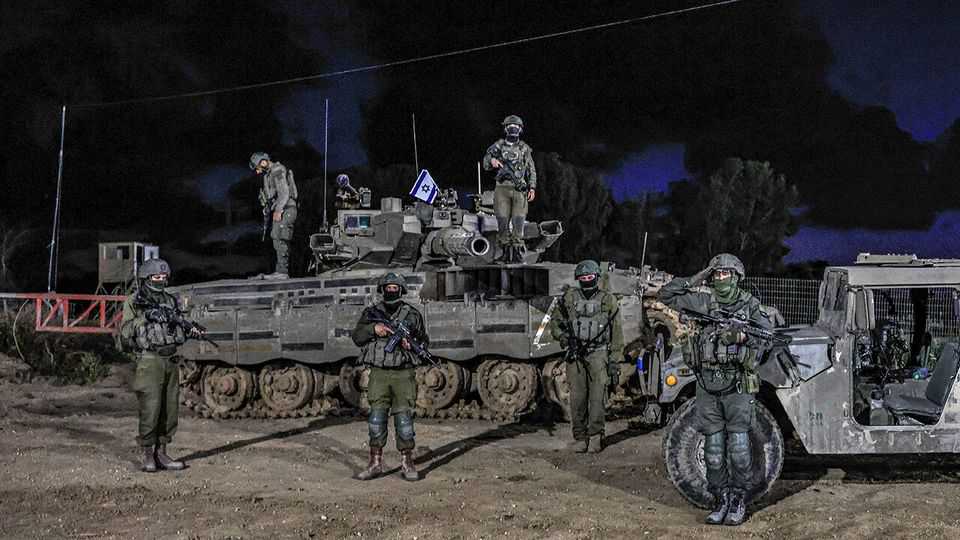
Mr Trump, however, was a no-show. Instead of a presidential visit, on April 16th Israel received orders from America’s president tostop bombing Lebanon(the ceasefire also included Hizbullah, an Iran-backed militia which began firing on Israel on March 2nd, prompting the latest fighting). Mr Trump is now the only person who can end the wars Israel seems incapable of ending itself. Since the attacks of October 7th 2023, it has fought devastating and prolonged campaigns in Gaza, Lebanon and Iran. It has abandoned a long-standing national-security doctrine favouring short decisive wars. Instead, Israel has blundered, wreaking havoc and inflicting appalling suffering while sapping its own resources and damaging crucial alliances.
This is the fifth ceasefire Mr Trump has imposed on Israel in the past 15 months: two were in Gaza in 2025 and two over Iran. Israel and America launched the current war against Iran together. But it was Mr Trump who paused it, against the wishes of Binyamin Netanyahu, the Israeli prime minister. Israel is not a party to the on-off talks between America and Iran on a more comprehensive deal; it will have to abide by whatever is agreed in Islamabad.
Nevertheless, Mr Trump has tired of the open-endedness of Israel’s wars and the disruption they have caused. Arguably, the American president recognises what Israel—both its government and many of its citizens—refuses to accept: that Israel’s current wars are failures. “They dragged on without a clear diplomatic purpose or outcome,” says Jeremy Issacharoff, a former Israeli ambassador who has also been in charge of strategic affairs at the foreign ministry. “The ceasefires are a positive development, but having them dictated to us by America harms Israel’s deterrence and makes it a client state.”
In Gaza and Lebanon Israel launched massive air strikes and ground campaigns in response to attacks by Hamas, militants in Gaza, and Hizbullah. It did huge damage to both groups and killed their leaders. But it also killed tens of thousands of civilians, levelling much of Gaza and destroying entire towns and villages in Lebanon. In both places ceasefires were agreed but then collapsed. Israel captured swathes of territory as “security zones,” to be held indefinitely. But Hamas and Hizbullah, though weakened, remained entrenched. Mr Netanyahu promised “total victory” but instead was forced by Mr Trump to end (or at least pause) Israel’s campaigns without removing the threat on its borders.
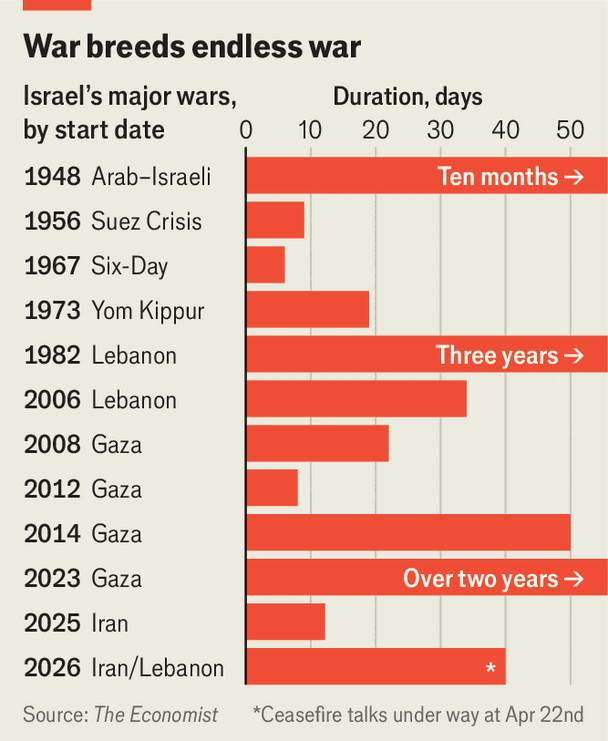
Likewise, after the end of the war against Iran last June the Israeli prime minister assured his people that the “existential threats” of Iran’s nuclear programme and ballistic missiles had been “removed” in “a historic victory which will stand for generations”. Instead, eight months later, Israel was at war with Iran again. This time Mr Netanyahu added another war aim, to “crush the regime in Iran” and prepare the ground for an uprising by the Iranian people. Instead, the regime in Tehran endures and Mr Trump is now intent on reaching a deal with it.
This is not how leaders in Israel used to envisage warfare. Its founding prime minister, David Ben-Gurion, argued that the duty of Israel’s government was to prolong periods of calm between conflicts, then use that time to build up the new country’s economy and society, as well as its military power. In times of war the Israel Defence Forces (IDF) would have to mobilise reserves swiftly, since Israel was too small to maintain a large standing army.
Inspired by Ben-Gurion, Israel’s national-security doctrine was formulated around three Hebrew watchwords: harta’a (deterrence); hatra’a (early warning); and hachra’a (decisive action). The doctrine’s essence was that a tiny country with a small population in a hostile region could not afford to wage long wars frequently. It needed to wield overwhelming military power to deter its enemies, to be capable of detecting when they were planning an attack and to be able to act quickly, ideally pre-emptively, to secure victory in its enemies’ territory. And, importantly, Israel could not rely on its army alone, wrote Ben-Gurion: “a foreign-policy of peace” was, he wrote, a “fundamental component of security”. Israel needed alliances and international legitimacy to secure its future.
Israel’s current leaders have abandoned many of those principles. Hundreds of thousands of reservists have spent many months fighting in Gaza and Lebanon and enforcing Israel’s increasingly brutal occupation of the West Bank. The devastation of Gaza, where Israel has killed over 70,000 people and where the population has been brought close to starvation, has greatly eroded Israel’s international legitimacy and support, even among its allies.
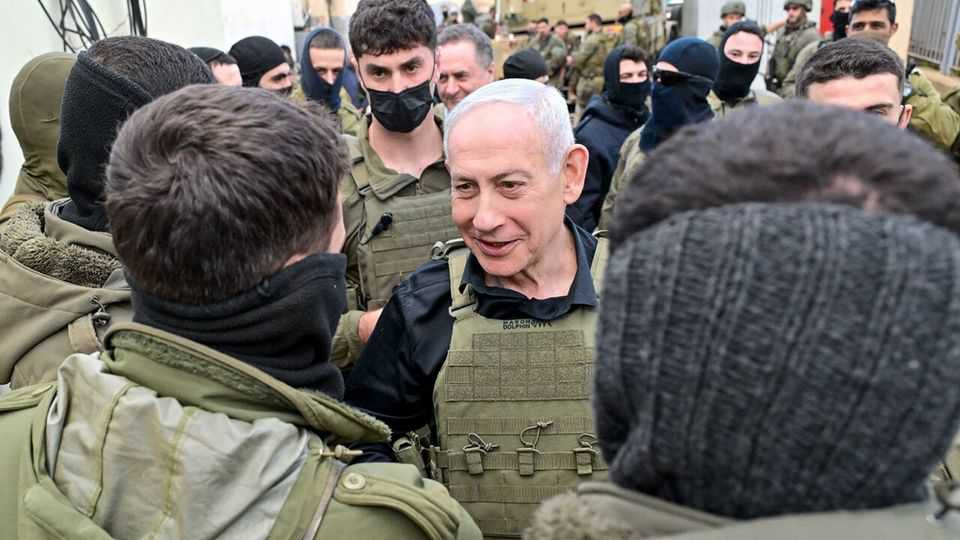
And neither Israel’s leaders nor its people seem to have learnt anything from Gaza. Israel has resorted to similar tactics in Lebanon, uprooting civilians and destroying villages, despite Israel’s generals admitting that their campaign would not be sufficient to disarm Hizbullah or even prevent it from firing missiles. Mr Netanyahu has also allowed soldiers to operate with impunity. Allegations of war crimes have received little scrutiny.
“The Israeli public doesn’t want to hear now that you can’t just destroy Hamas or Hizbullah, or topple the regime in a massive country like Iran,” says Dan Meridor, a former minister from Mr Netanyahu’s Likud party who in 2006 had the task of revising Israel’s national-security doctrine. “They want to hear that the IDF is omnipotent. But as long as the aims are unrealistic and the only solutions are solely military, we’re bound to fail.”
The massacres of October 7th traumatised Israelis and their military leaders. Yet Israel’s politicians and generals have so far faced no reckoning for failures of deterrence and early warning, largely because of the continuing wars. Mr Netanyahu, anxious to hold together his far-right coalition, which includes ministers who have advocated ethnic cleansing in Gaza and southern Lebanon, has refused to appoint an independent commission of inquiry.
Meanwhile, a new unofficial doctrine has emerged in which the notion of pre-emptive action has been redefined. According to this, if Israel can no longer rely on detecting enemies’ intentions, it must act much earlier against their capabilities. That principle guides its wars with Iran and the occupation of “security zones” inside Gaza, Lebanon and even Syria, though the new government in Damascus is trying to reach a security agreement with Israel.
Senior IDF officers grumble about having to fight wars without an overall strategy. But in public they have fallen into line with Mr Netanyahu’s open-ended conflict. “The IDF used to be able to restrain the politicians,” says Or Rabinowitz, an expert on Israeli strategy at Stanford University. “But the generals are too cowed now by their October 7th failure to oppose the government’s worst tendencies. They can’t even rein in their own soldiers who are helping settlers in the West Bank attack Palestinians. The only restraint now is Trump’s foot on the brakes.”■