Britain’s reliance on Ukrainian eggs is ruffling feathers
Farmers say the cheap imports enable fowl play
 April 23rd 2026
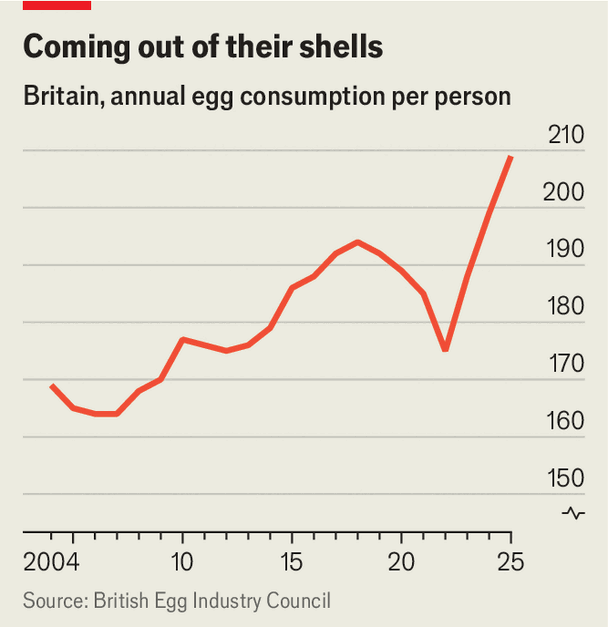
British chickens’ output has not kept up with soaring demand. Last year the average Briton ate 209 eggs, 45 more than in 2005. Some credit lockdown baking mania for the surge; others the rise of brunch (see chart).
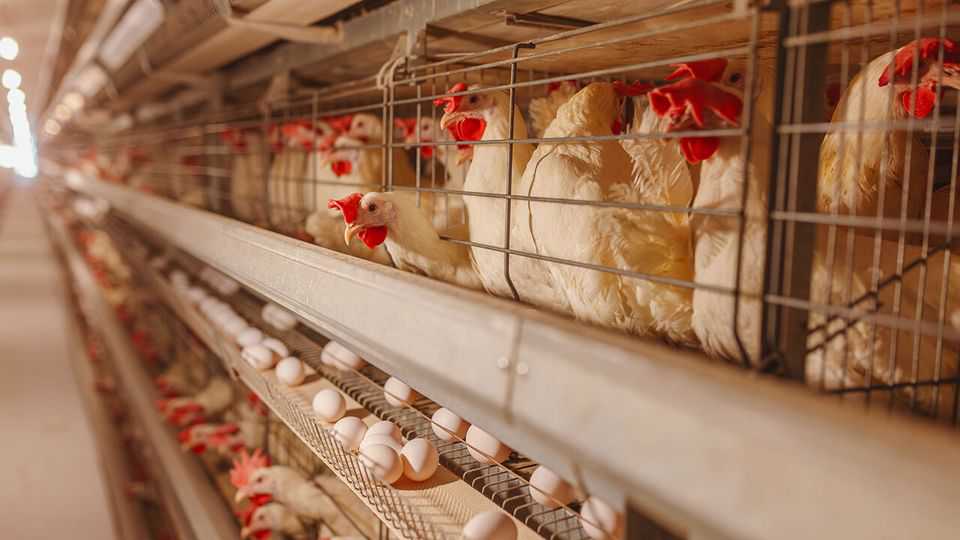
Meanwhile, supply problems have deepened the deficit. First, bird flu struck, leading to culls that shrank England’s laying flock by 10% since 2021. Next, Russia’s invasion of Ukraine sent prices of chicken feed and electricity, needed to keep barns lit, flying. Eggs have become 36% dearer in real terms.
To help bridge the gap, Britain has turned to foreign hens. Since 2021 egg imports have doubled. About one in nine eggs on British shelves are now from abroad, compared with roughly one in 30 in 2022. Last year most of those imported eggs came from Ukraine.
After Russia’s invasion, Britain and the EU removed tariffs and quotas on Ukraine’s agricultural imports. This solidarity led to farmer protests and the EU reimposed barriers last year. Only Britain has kept egg trade tariff-free until 2028; a record 200m Ukrainian eggs arrived last year.
British farmers complain of fowl play. Many imported eggs are Class B—oddly shaped or with thin shells—and turned straight into biscuits and sauces, or used in restaurants. Farmers say they are being priced out by these cheap eggs.
Big egg claims consumers are being misled. Two of Ukraine’s largest producers use battery cages, a system banned in Britain in 2012. Seven in ten Britons would stop eating somewhere that served eggs by battery chickens, found YouGov, a pollster. But no law prevents restaurants from using these and for consumers there is no way of knowing the origin of their eggs Benedict.
As for embattled Ukraine, farm goods made up over half of the country’s exports in 2025. It is counting on hungry Britons to help it scramble to victory.■