A botched election adds to Peru’s democratic dysfunction
A strongman’s daughter will face a leftist or an ultraconservative in the run-off
 April 23rd 2026
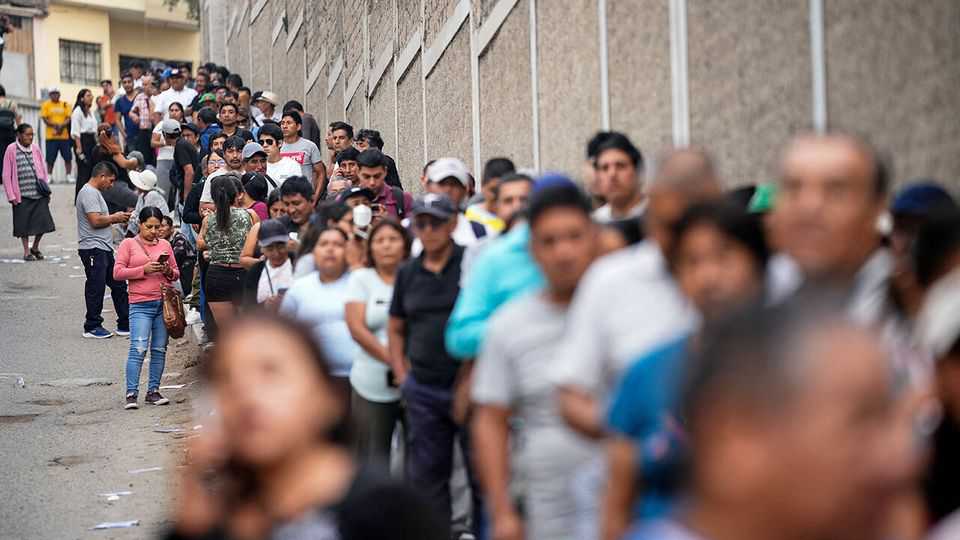
La fiesta democrática, as election day is known in Peru, is usually a well-run operation. But when people went to vote on April 12th, the fiesta became a fiasco. Delays in delivering election materials caused long queues outside polling stations in Lima, the capital.
Peru’s election organiser, ONPE, said those unable to cast a ballot would not be fined (voting is compulsory). That added insult to injury. “Voting is supposed to be a right,” says Emilio Rojas, who waited hours to do so. “What happened to ‘every vote counts’?” Voting was extended to a second day at nearly 200 stations that failed to open. On April 21st ONPE’s head resigned.
Few voters were in a festive mood to begin with. Peru has had nine presidents since 2016. Four former leaders have been imprisoned; another killed himself to avoid arrest. The churn has wrecked trust in institutions, but has not stopped others from seeking the top job. A record 35 candidates ran for the presidency this year (36 including one who died ahead of the vote). None had widespread support.
Now Peru is in electoral limbo. Keiko Fujimori, the daughter of Alberto Fujimori, the late right-wing strongman, won a big enough lead to secure her place in the second round scheduled for June 7th. The race to be her opponent is still too close to call. Roberto Sánchez, a leftist, is ahead of Rafael López Aliaga, an ultraconservative, by fewer than 20,000 votes. A complete count is unlikely before mid-May.
Supporters of Ms Fujimori and Mr López Aliaga want a tough leader to tackle crime. Mr Sánchez, in contrast, channelled resentment of elites. His slogan—“We’re not a poor country, we’re a looted country”—resonates with supporters of Pedro Castillo, a left-wing president who attempted a “self-coup” in 2022.
Election observers found no evidence of fraud. But the debacle at the polls in Lima may have harmed Mr López Aliaga, the city’s former mayor. Preliminary analysis of absentee rates suggests it could have cost him thousands of votes. An admirer of President Donald Trump, Mr López Aliaga has vowed an “insurgency” unless the election is annulled. He claims he was the victim of a plot and has threatened to stick this alleged conspiracy up the “you-know-where” of the electoral court’s president.
Mr Sánchez has summoned his voters to protests, warning an attempted “coup” could be under way. They could clash with Mr López Aliaga’s supporters, who have already protested against “fraud”.
Tensions with the United States are adding to the turmoil. Last week Peru’s interim president tried to back out of a deal to buy F-16 fighter jets, arguing that his successor should decide. The US ambassador responded angrily. The deal went through, but on April 22nd the foreign and defence ministers resigned over the affair.
Mr Trump has not endorsed anyone. But if Mr Sánchez makes it to the run-off, the American president might be tempted to back Ms Fujimori. While Mr Sánchez would probably face the same constitutional constraints and conservative Congress that thwarted Mr Castillo’s radical proposals, he would join other leftist leaders in Latin America who reject Mr Trump’s efforts to dominate the region.
Whoever wins will have a weak mandate. The three top candidates together won less than half of the vote. “The lack of legitimacy of presidents and politicians in general is one the biggest problems in Peruvian politics,” says Rodrigo Barrenechea of the Pacific University in Lima. Deep distrust and a shambolic election could be “an explosive combination”.■