Business
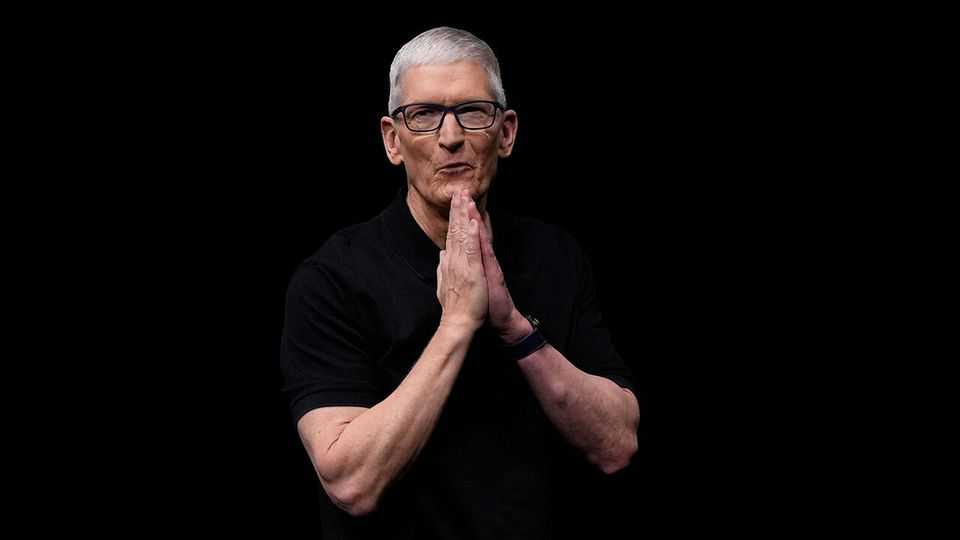
APPLE ANNOUNCED That Tim Cook would step down as chief executive after 15 years in the job. Under Mr Cook's stewardship Apple's share price rose by almost 2,000%, propelling it to a $4trn valuation on the stockmarket. Sales of the iPhone are booming with every new iteration of the device. Mr Cook also had to ensure China remained an important sales market amid its rocky trade relations with America. But Apple is lagging behind other tech titans in developing AI services, a worry for some investors. The new CEO from September will be John Ternus, the current head of the hardware division behind Apple's innovations in phones and computers. Mr Cook will become executive chairman.
The Senate Banking Committee grilled Kevin Warsh about his suitability to be the next chairman of the Federal Reserve. At the confirmation hearing Mr Warsh insisted that Donald Trump had not asked him to "predetermine" an interest-rate decision during their discussions about his nomination for the job, "nor would I ever agree to do so". The president hopes that Mr Warsh will be confirmed before Jerome Powell steps down on May 15th, but Thom Tillis, a Republican on the banking committee, is threatening to block the nomination until the Justice Department drops its investigation of Mr Powell.
United Airlines reported bumper demand for business and premium travel, but it reduced its forecast of annual profit because of the extra costs it expects to incur from higher jet-fuel prices as a result of the Iran war. Lufthansa cut 20,000 short-haul flights from its schedule in order to save 40,000 tonnes of fuel. Meanwhile, TUI, Europe's biggest travel company, lowered its profit outlook because of the "volatile geopolitical backdrop". Tourists were delaying their holiday plans, it said, and demand was markedly lower for countries that abut the conflict zone, such as Egypt and Turkey.
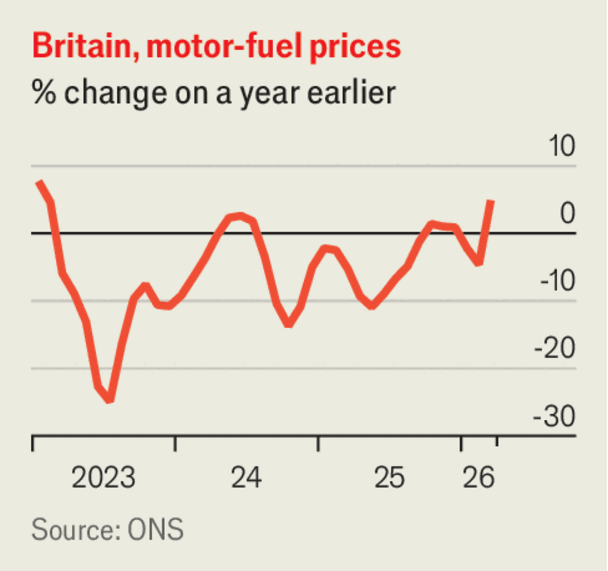
Britain's annual inflation rate jumped from 3% in February to 3.3% in March, mostly because of the rising cost of motor fuels caused by higher oil prices. The price index for petrol and diesel increased by 4.9% in the 12 months to March; it had fallen by 4.6% in the 12 months to February. Markets are now betting that the Bank of England will raise interest rates at some point this year.
With the Pentagon replenishing its weaponry amid the Iran conflict, America's defence industry produced solid earnings. Northrop Grumman's revenue rose in the first quarter, helped by a 17% increase in sales at its aeronautics division, year on year. RTX lifted its annual profit outlook amid high demand for its missile systems. Revenue at Boeing's defence, space and security business soared by 21%.
Tesla's net profit for the first quarter rose by 17% compared with a particularly weak quarter a year ago. At $477m it is the carmaker's second-lowest profit in five years. The company boosted its forecast of capital expenditure this year, as it plans to spend more on AI, robotics and self-driving cars.
The share prices of companies that develop psychedelic drugs surged after Donald Trump issued an order to accelerate the approval of the drugs in order to treat mental illness. Mr Trump wants to allow the use of psychedelics such as a synthetic version of psilocybin, which is found in "magic" mushrooms, that studies suggest can help alleviate depression, PTSD and addiction.
America's customs agency began processing requests for refunds for Mr Trump's tariffs from importers that had to pay them. In February the Supreme Court ruled that duties imposed under the International Emergency Economic Powers Act were illegal. Some companies, including Costco and FedEx, have pushed to ensure they get a payment, but it is not clear how many others will claim refunds. Some $166bn was collected in the unlawful tariffs.
The Swiss government issued a regulatory demand for UBS to increase its capital by $20bn as it is deemed too big to fail. The government argues that its proposal is "more moderate than planned", but the Swiss bank said it was "extreme, lacks international alignment" and would hurt the Swiss economy.
A week after reports that Meta is working on an animated AI of Mark Zuckerberg to interact with employees, it emerged that the company has created a tool to track workers' computer keyboard strokes and mouse movements in order to train its AI models. One member of staff was reported as saying Meta has become "obsessed" with AI. A former employee said the firm is "shoving AI down everyone's throat". Some staff think all the focus on AI is just a prelude to another round of swingeing job cuts.■